ISUFST President Siason Honored as 2026 Gawad Lingkod Bayan ng Pangulo Regional Qualifier
What began as a nomination kept from him became, for Iloilo State University of Fisheries Science and Technology (ISUFST) President Dr. Nordy D. Siason Jr., CESO VI, an occasion to speak less about himself and more about the family, colleagues, and public servants who made his work possible.
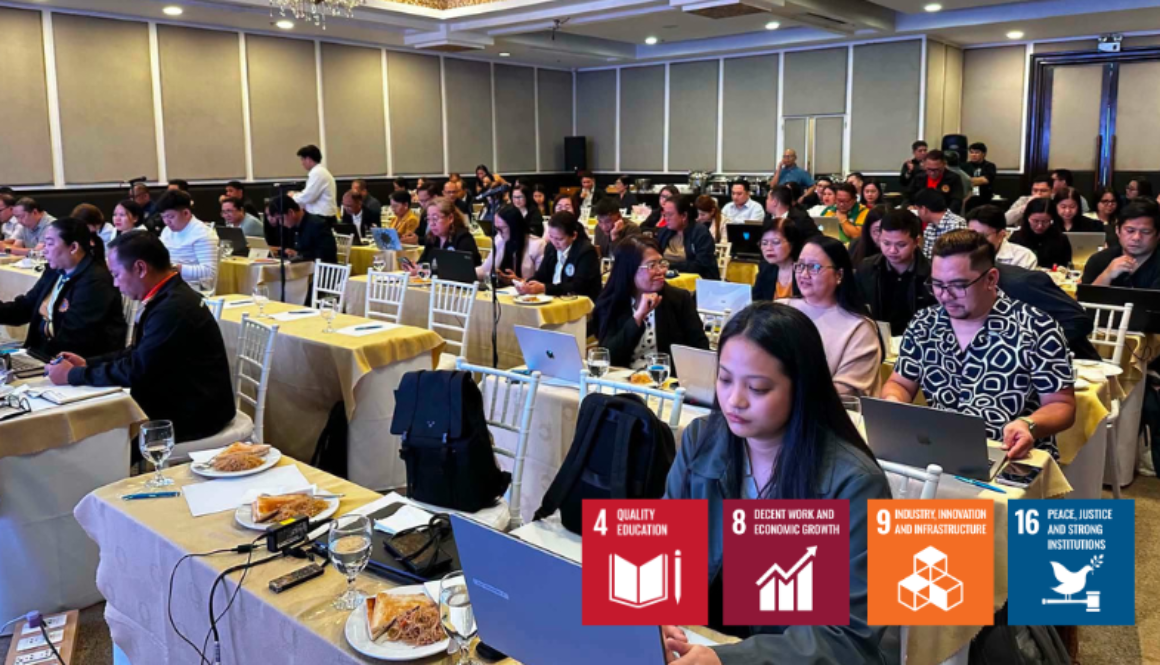
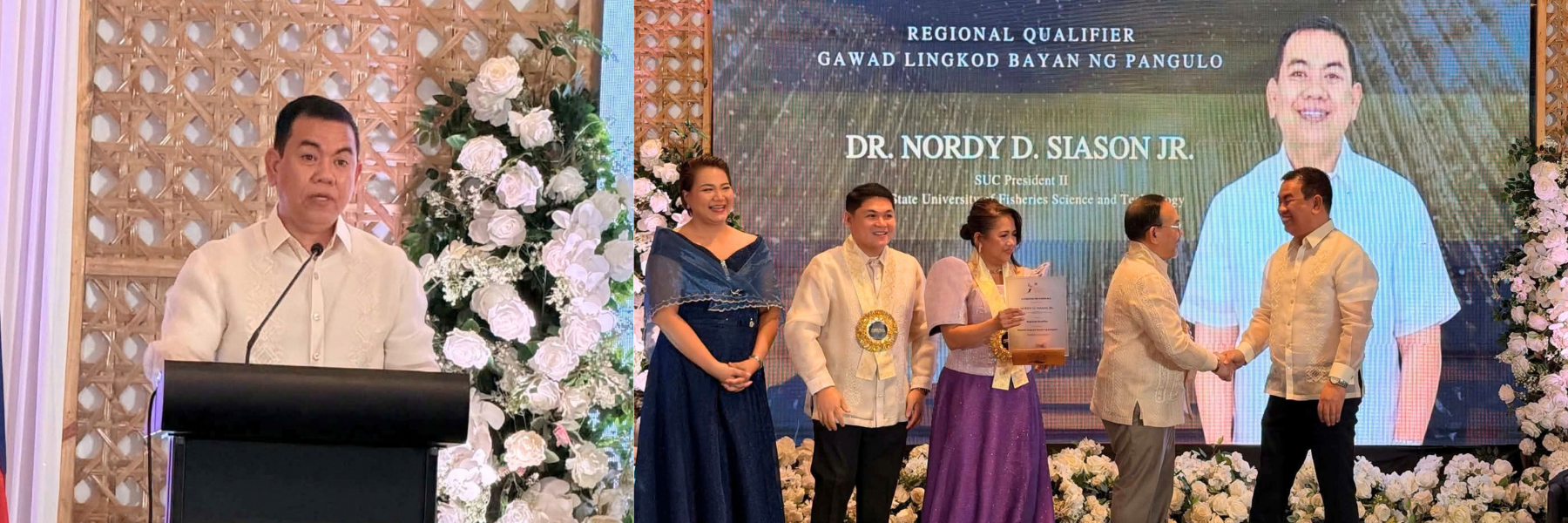
Siason was honored as a 2026 Gawad Lingkod Bayan ng Pangulo Regional Qualifier during the Civil Service Commission (CSC) Regional Office VI’s Pasidungog kag Pasalamat 2026, held this evening, September 30, in Courtyard by Marriott Iloilo, Mandurriao, Iloilo City, as part of the 126th Philippine Civil Service Anniversary.
Chosen to deliver the response on behalf of the 2026 Gawad Lingkod Bayani awardees, Siason opened with characteristic humor, admitting that the recognition had caught him completely off guard.
“I have to confess, this moment comes as a big, genuine surprise,” Siason said, recalling that when he was first told he had become a regional qualifier, he initially thought “it was just a prank.”
He later discovered that people around him had quietly worked on the nomination without telling him.
“To whoever orchestrated this nomination without my knowledge, thank you very much,” he said, before joking that those responsible might be due for “a gentle administrative chat about an unauthorized operation later.”
The humor soon gave way to a deeply personal acknowledgment of the people behind his years in public service.
Siason dedicated much of the recognition to his wife, Amabel, whom he described as the person in their household who embodies “relentless public service, sacrifice, and quiet heroism.” He spoke of the sacrifices she had made in her own career and at home while he devoted long hours to university leadership.
He likewise thanked their sons, Dyron and Aaron, for their patience with a father who, as he put it, was often “perpetually at the office or lost in thought over institutional documents.”
“Amabel, Dyron, and Aaron, this recognition belongs to you just as much as to me,” Siason said. “Public service, after all, is never a solo endeavor.”
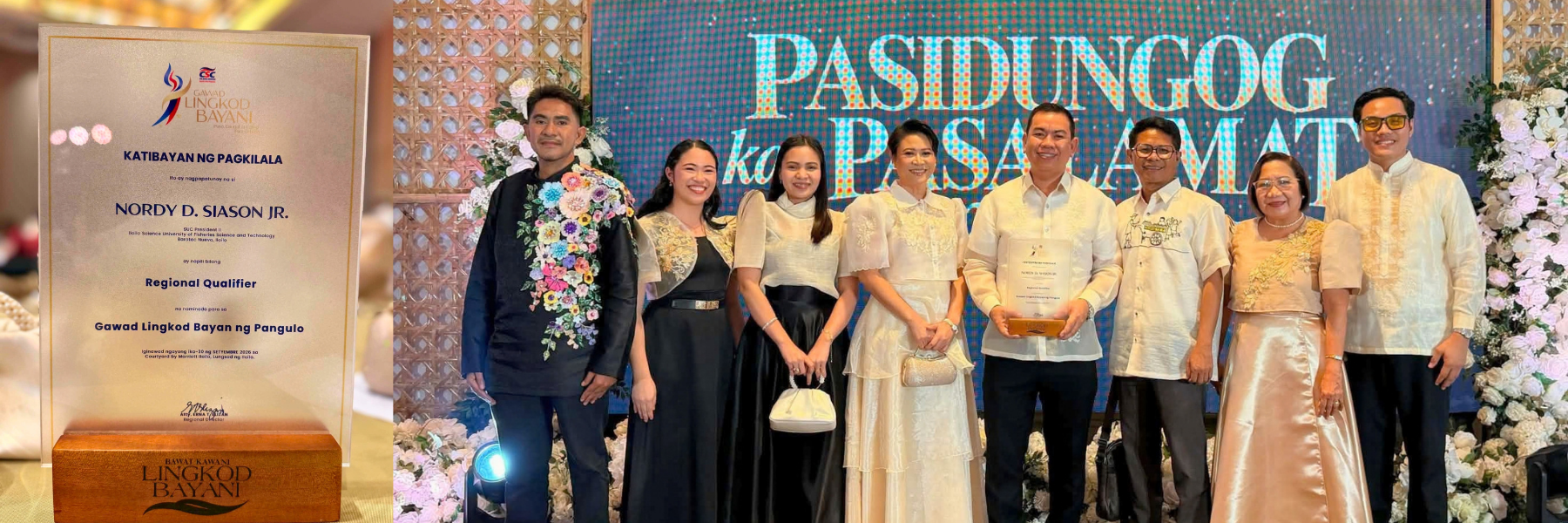
AN HONOR SHARED WITH ISUFST
Siason extended the same message to the ISUFST community, sharing the recognition with the University’s Board of Regents, vice presidents, planning officers, officials, campus leaders, faculty, personnel, and staff, as well as colleagues from his previous years in the Department of Education in Iloilo and Guimaras.
He pointed to ISUFST’s institutional milestones not as the accomplishments of a single president, but as products of collective work.
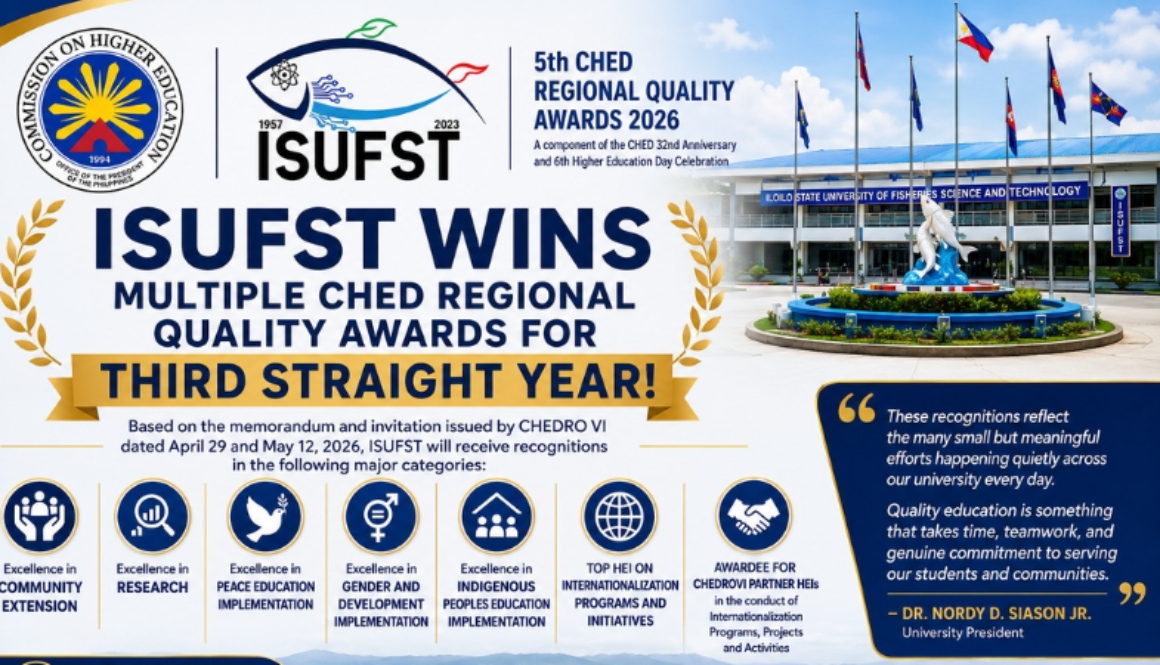
“These awards, the milestones we have reached, our entry into the Times Higher Education World University Rankings, our regional awards given by CHED Region VI, and our journey toward global-standard education are reflections of our sweat, late nights, and shared vision,” he said.
While the recognition may have been given for leadership, Siason turned the credit back to the people he leads.
“You wanted to show appreciation for transformative leadership, but the truth is, it is your collective resilience that makes any leadership possible in the first place.”
His remarks also traced a public-service journey that began long before the university presidency. Siason recalled serving as a classroom teacher, school principal for 13 years, and Assistant Schools Division Superintendent in Iloilo and Guimaras. He said he had never actively entered himself in competitions for individual recognition, making the CSC honor all the more unexpected.
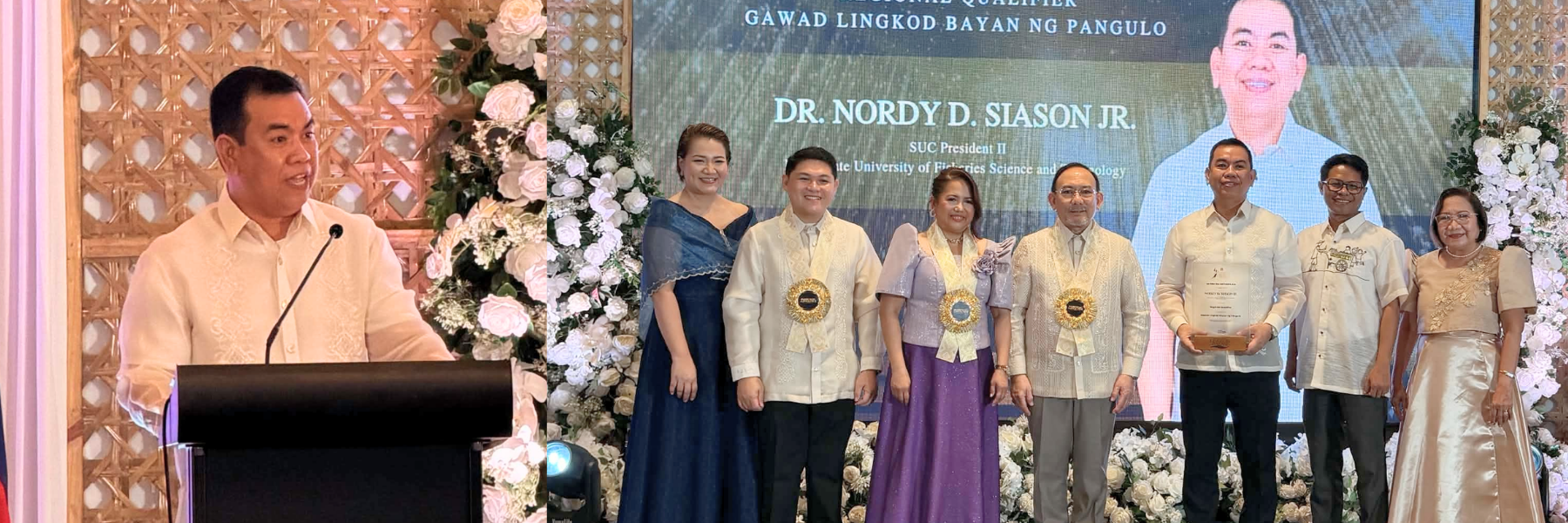
TAKING THE RISK TO SERVE
One of the most personal moments of the speech came when Siason reflected on his decision to leave a career path in the Department of Education and accept the challenge of leading an institution still working toward university status.
“I gave up everything just to serve an institution struggling to become a university,” he said, describing the decision as a risk he willingly took in the hope of helping the institution move forward.
He recalled how the institution’s long pursuit of university hood finally came to fruition during his leadership, framing the achievement not as a reason for personal applause but as an example of what public service can accomplish when people accept difficult responsibilities.
That experience, he said, helped shape his understanding of leadership: public service is ultimately measured not by positions or recognition, but by what changes in people’s lives.
“We do not work for the applause, the plaques, or the titles,” Siason told his fellow awardees. “We serve because our communities deserve better. Because every policy we write, every classroom we build, and every system we reform touches a human life.”

SERVICE ROOTED IN INTEGRITY AND KINDNESS
Siason also thanked CSC Regional Office VI and the Iloilo Field Office for sustaining a culture that recognizes integrity, excellence, and human-centered governance in the bureaucracy.
His message moved beyond institutional accomplishments to the larger responsibilities of government workers, including the continuing struggle against fraud and corruption. He echoed the hope expressed during the program that government systems can be strengthened when public servants work together.
For Siason, however, reform must also retain its human side. He urged public servants to “grow and plant kindness for everybody,” grounding leadership in humility, faith, and concern for others.
Addressing his fellow honorees, he ended not with his own recognition but with a call to continue the work that brought all of them to the ceremony.
“Let us continue to serve with passion, with humility, and with a heart for the people,” he said.
The Pasidungog kag Pasalamat 2026 also honored regional qualifiers in the Gawad Pagasa, Gawad Dangal ng Bayan, and Gawad Lingkod Bayan ng Pangulo, as well as national semi-finalists and CSC Regional Office VI partner agencies and institutions.
For ISUFST, Siason’s recognition may bear the name of its University President, but his acceptance speech made clear whom he believed the honor truly belonged to: the family that carried part of his burden, the university community that shared the work, and the people whom public service is ultimately meant to serve. (Herman Lagon | Rex Paulino | Edmner Bernardo | Jonard Verdeflor | PAMMCO)