Beyond Coastal Cleanups: The Story of ISUFST’s Saving Banate Bay Project


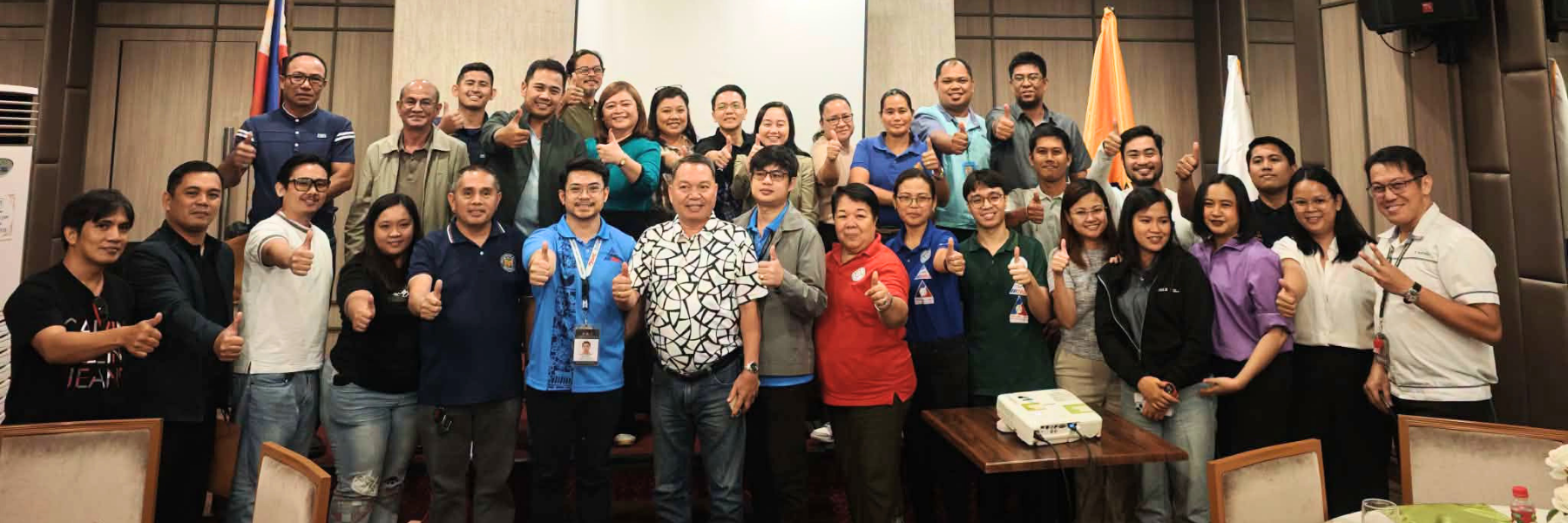
SAN ENRIQUE, Iloilo—Teachers and guidance designates from the Municipality of San Enrique experienced two days of further learning, collaboration, and planning in areas that are highly relevant nowadays. The Iloilo State University of Fisheries Science and Technology (ISUFST), in collaboration with West Visayas State University (WVSU) and the Local Government Unit of San Enrique, successfully finished Project STEP UP (San Enrique Training for Educators and Professionals in Uplifting Psychosocial Support) Phase 3 on June 25–26 at the Tourism and Cultural Center.
The third phase of the six-phase extension program of ISUFST was focused on Career Guidance and Bullying Prevention, providing participants with practical knowledge and school-based solutions that may be easily implemented in their schools. The activity is part of the continuous STEP UP effort to improve psychosocial support services and learner well-being in San Enrique.
Day one was designed to enable guidance designates and wellness advocates guide learners to make informed educational and career choices.
Dr. Herman M. Lagon, RGC, of ISUFST kicked off the talks through a session on Understanding Career Development Across the Lifespan. He emphasized that career guidance is not just about helping students to select a vocation. it is helping learners to identify their abilities, interests, values and goals and to make choices about their future.
Prof. Jan Iris Faye M. Basbas, RGC, of WVSU gave a talk on how to determine the learners’ strengths, interests, and aspirations. Dr. Hilda C. Montaño, RGC, of WVSU, on the other hand, discussed the current career trends and opportunities in Iloilo and beyond to help participants relate career guidance to local and emerging employment opportunities.
Practical applications took center stage in the afternoon as Mrs. Junna Mari G. Pacardo, RGC, introduced career guidance tools and school-based activities, followed by a workshop on designing a Career Guidance Week facilitated by Dr. Imelda M. Arenga, RGC. The day concluded with a reflection session led by Ms. Keziah A. Lagarto, RGC, encouraging participants to envision the kind of future they hope to help create for their learners. All the three are guidance couselors from ISUFST.
On the second day, discussions shifted toward creating safer and more inclusive schools.
Dr. Rejie F. Palmos, RGC, of WVSU led sessions on bullying prevention, child protection, restorative practices, and conflict resolution, highlighting the importance of early intervention, empathy, and restorative approaches in resolving school concerns.
Ms. Roussel Justin B. Esmeralda, RGC, of ISUFST discussed Republic Act No. 10627 and the DepEd Child Protection Policy, helping participants better understand their responsibilities in protecting learners and responding appropriately to reported cases.
Participants then engaged in hands-on workshops. Dr. Lagon facilitated a session on Case Handling and Documentation, where participants analyzed school-based situations and practiced proper documentation and referral procedures. Prof. Ruby P. Faunillo, RGC, of ISUFST, guided participants in designing school-based anti-bullying advocacy campaigns, while Dr. Amabel T. Siason, RGC, of WVSU led the development of localized Child Protection Standard Operating Procedure (SOP) flowcharts.
The two-day activity brought together the participants to collaboratively work on outputs that they can implement in their respective schools. These outputs are Career Guidance Week Plans, Career Opportunities and Referral Matrices, Anti-Bullying Advocacy Plans, Child Protection SOP Flowcharts, and School Commitment Statements for Safe and Inclusive Schools. These outputs are intended to boost advisory services and learner protection programs in anticipation of School Year 2026–2027.
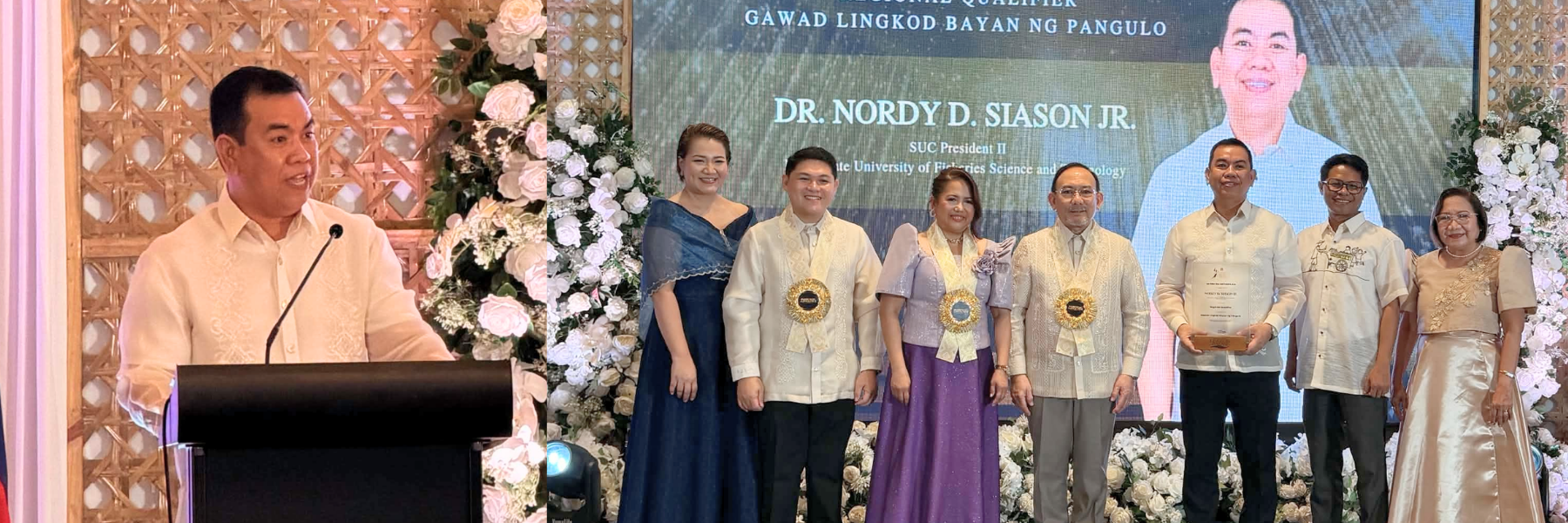
For ISUFST President Dr. Nordy D. Siason Jr., CESO VI, the success of STEP UP goes beyond the conduct of a training program. It is about building lasting partnerships that help schools better serve their learners.
“Every learner deserves a school where they feel safe, valued, and encouraged to dream. Through Project STEP UP, we are investing not only in the professional growth of our teachers and guidance advocates but also in the future of every child they will guide. Our partnership with the Municipality of San Enrique and West Visayas State University reflects our shared commitment to making quality education more responsive, compassionate, and inclusive,” Dr. Siason said.
The activity ended with the STEP UP Safe Schools Commitment Rites, when participants literally took oath to advance the promotion of learner well-being, career preparedness, child protection and inclusive school communities through the plans they established throughout the training.
Project STEP UP continues to highlight the need of partnerships between higher education institutions, local government and schools in establishing stronger systems of support for learners. Building on the expertise of guidance counselor-volunteers from ISUFST and WVSU, and with the support of the LGU of San Enrique, the initiative continues to equip educators with practical tools that help learners discover their potential while ensuring that schools remain safe, inclusive and nurturing environments for all.
Project STEP UP will continue with Phase 4 on August 27–28, focusing on Parents Engagement and the Review and Evaluation of Participants’ School-Based Implementation of the strategies and outputs developed during the earlier phases. (PAMMCO)
#ISUFSTISDAFirst #ISUFSTCommunity #STEPUPtoCare #ProjectSTEPUP #CareerGuidance #SafeSchools #ChildProtection #ISUFST #ISUFSTMIS #PAMMCOAmbassadors #PAMMCOStoriesThatMatter


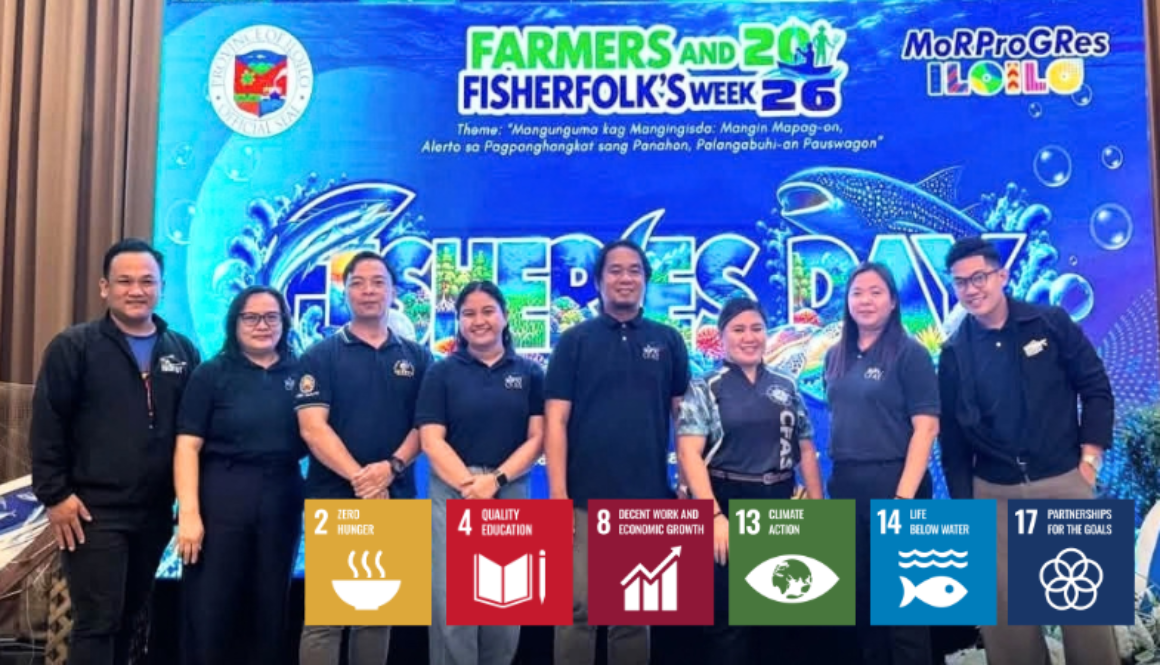
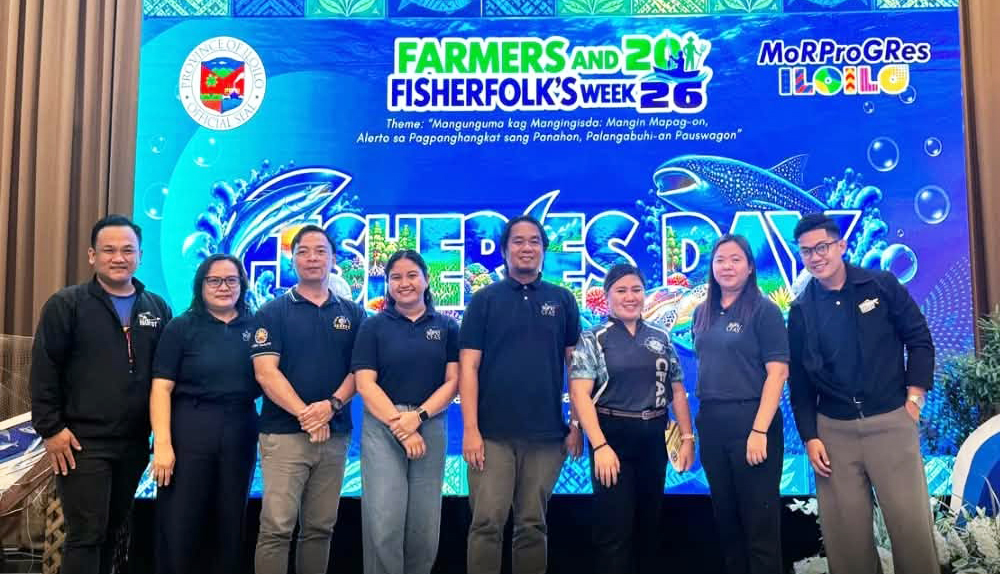
As we commemorate 𝐍𝐀𝐓𝐈𝐎𝐍𝐀𝐋 𝐅𝐈𝐒𝐇𝐄𝐑𝐅𝐎𝐋𝐊𝐒 𝐃𝐀𝐘 𝐓𝐇𝐈𝐒 𝐒𝐔𝐍𝐃𝐀𝐘, 𝐌𝐀𝐘 𝟑𝟏, 𝟐𝟎𝟐𝟔, we honor the women and men whose daily labor sustains our communities, strengthens our food security, and keeps our coastal traditions alive. In celebration of their courage, resilience, and enduring hope, we present “Let the Line Hold,” an advocacy folk ballad inspired by the growing call of the Atin ang Kinse movement and the continuing struggle to protect the 15-kilometer municipal waters reserved for small-scale fisherfolk.
This song was not only produced by ISUFST Faculty as a musical tribute but was also presented as a Creative Works Presentation and performed during the plenary session of the Second Philippine Small-Scale Fisheries National Symposium (PSSFNS2) held on October 20–24, 2025, at Mindanao State University in Marawi City, Philippines. Through music, it tells a story of dignity, justice, livelihood, and the shared responsibility of protecting our seas for future generations.
For the fisherfolk. For the coast. For the kinse. Let the line hold.
***
𝐋𝐄𝐓 𝐓𝐇𝐄 𝐋𝐈𝐍𝐄 𝐇𝐎𝐋𝐃 | Lyrics by Herman M. Lagon | Composition and Interpretation by Jezreel Cabansagan-Donguila | Instrumentals by Psalmista Band | Video Editing: Mr. Patrick Lance Nacion | ISUFST
Before the music begins, it is important to understand why this song was written.
“Let the Line Hold” is more than a folk ballad. It is a tribute to the women and men of our coastal communities whose lives, livelihoods, and futures are tied to the sea. Inspired by the growing call of the Atin ang Kinse movement, the song speaks for small-scale fisherfolk who continue to defend the 15-kilometer municipal waters reserved by law for municipal fishers—waters that have sustained families, communities, and local food security for generations. The song draws inspiration from the stories, struggles, hopes, and resilience shared by fisherfolk, scientists, educators, advocates, and community leaders who believe that protecting the kinse is not merely a fisheries issue but a matter of justice, dignity, and national survival.
This advocacy folk ballad was written by Dr. Herman M. Lagon, inspired by conversations and encounters with fisherfolk and stakeholders during the National Fisherfolk’s Day Celebration and the broader Atin ang Kinse campaign. The music was composed and interpreted by Jezreel Cabansagan-Donguila, whose heartfelt melody gives voice to the emotions behind the movement, while the Psalmista Band provided the instrumental arrangement that carries the song’s message across communities.
Together, they transformed policy discussions and scientific evidence into a musical narrative that ordinary Filipinos can feel, remember, and share.
At its heart, “Let the Line Hold” reminds us that the kinse is more than a boundary on a map. It is a symbol of livelihood, cultural memory, food security, community resilience, and hope. It represents the right of small-scale fisherfolk to continue fishing in the waters their families have depended upon for generations. Through music, this work invites us to listen to the voices behind the statistics, to see the people behind the policies, and to stand with those who continue to protect our seas for future generations.
As the song unfolds, may we remember a simple but powerful truth: when we protect the kinse, we protect not only fish and waters, but also families, communities, heritage, and the future of sustainable small-scale fisheries in the Philippines.
Lyrics: Dr. Herman M. Lagon
Composition and Interpretation: Dr. Jezreel Cabansagan-Donguila
Instrumentals: Psalmista Band
Video editing: Mr. Patrick Lance Nacion
Genre: Advocacy Folk Ballad | Key: G Major | Tempo: ~70 bpm
For the fisherfolk. For the coast. For the kinse. Let the line hold. #AtinAngKinse
YouTube Link: https://www.youtube.com/watch?v=CB_uKskahos
Official ISUFST Statement on the Supreme Court Ruling Allowing Commercial Fishers to Operate on the Municipal Waters, entitled SAFEGUARDING OUR SEAS: https://web.faceboo*om/share/p/18UtjUbyQe/


BAROTAC NUEVO, Iloilo—For a university joining the World University Rankings for Innovation (WURI) for the first time, Iloilo State University of Fisheries Science and Technology (ISUFST) made a quiet but meaningful entrance—landing eight spots in the Global Top 100 across different innovation categories.
The 2026 results placed ISUFST at 7th in Social Impact through Knowledge Transfer (C5), followed by 21st in Empowerment-Based Management (B2). It also ranked 74th in Financial Impact-Driven Technology Transfer (C8), 76th in Curricular Innovation for Future-Readiness (C3), 86th in Funding for Sustainability (B5), 88th in Interdisciplinary Research (C2), 93rd in Cost-Effectiveness Management (B7), and 100th in AI-Based Teaching and Learning Transformation (C4).
For those on campus, the recognition does not feel sudden or overwhelming. It feels familiar—like something that grew out of long, steady effort, much of it done quietly, without expecting anything in return.
University President Dr. Nordy D. Siason Jr. described the result as a reflection of what the institution has been trying to build over time. “This is really about staying true to what we believe education should do,” he said. “Academic excellence matters, but it has to translate into something that improves lives. That has always been part of how we see our role.”
He also pointed out that the recognition aligns with broader national directions in higher education. “Our efforts are closely tied to CHED’s ACHIEVE framework under Chairperson Dr. Shirley Agrupis,” Siason added. “What this shows is that when innovation is anchored on service and social justice, it resonates beyond our immediate setting.”
Unlike more traditional rankings, WURI looks less at reputation and more at how universities respond to real problems—whether their ideas can actually work, and whether they make a difference. Its process combines blind peer review, expert validation, and system-based analysis, putting emphasis on programs that are not only creative, but also practical and impactful.
That approach has attracted growing global participation. In recent cycles, thousands of innovation cases from over a thousand universities worldwide have been reviewed, creating a space where institutions are compared not just by what they produce, but by what they change.
For ISUFST, the WURI entry builds on earlier steps toward international visibility—from internal workshops on global rankings to participation in regional capacity-building efforts. These were not isolated activities, but part of a longer attempt to align teaching, research, and extension work with global standards while staying grounded in local realities.
Over the years, much of the university’s work has naturally fallen in step with the United Nations Sustainable Development Goals (SDGs). Whether it’s widening access to education, finding practical ways to innovate, working with partners, or caring for marine resources, these have never really been new directions—they’ve long been part of what ISUFST stands for as the country’s only fisheries university.
Founded in 1957, the university has grown across five campuses, with programs spanning fisheries, education, technology, and management. In recent years, it has also received multiple recognitions from CHED, particularly in extension, peace education, student services, internationalization, and inclusive education.
Dr. Siason says the WURI results are “less about arrival and more about direction.”
“The work is far from finished. Much remains to be done—systems to improve and communities to serve better. But this recognition holds a simple truth: institutions do not have to be at the center to matter, as long as their work reaches people in real ways.” (Herman Lagon | Rex Paulino | PAMMCO)


#isufstisdafirst #isufstcommunity #isufst #pammcostoriesthatmatter