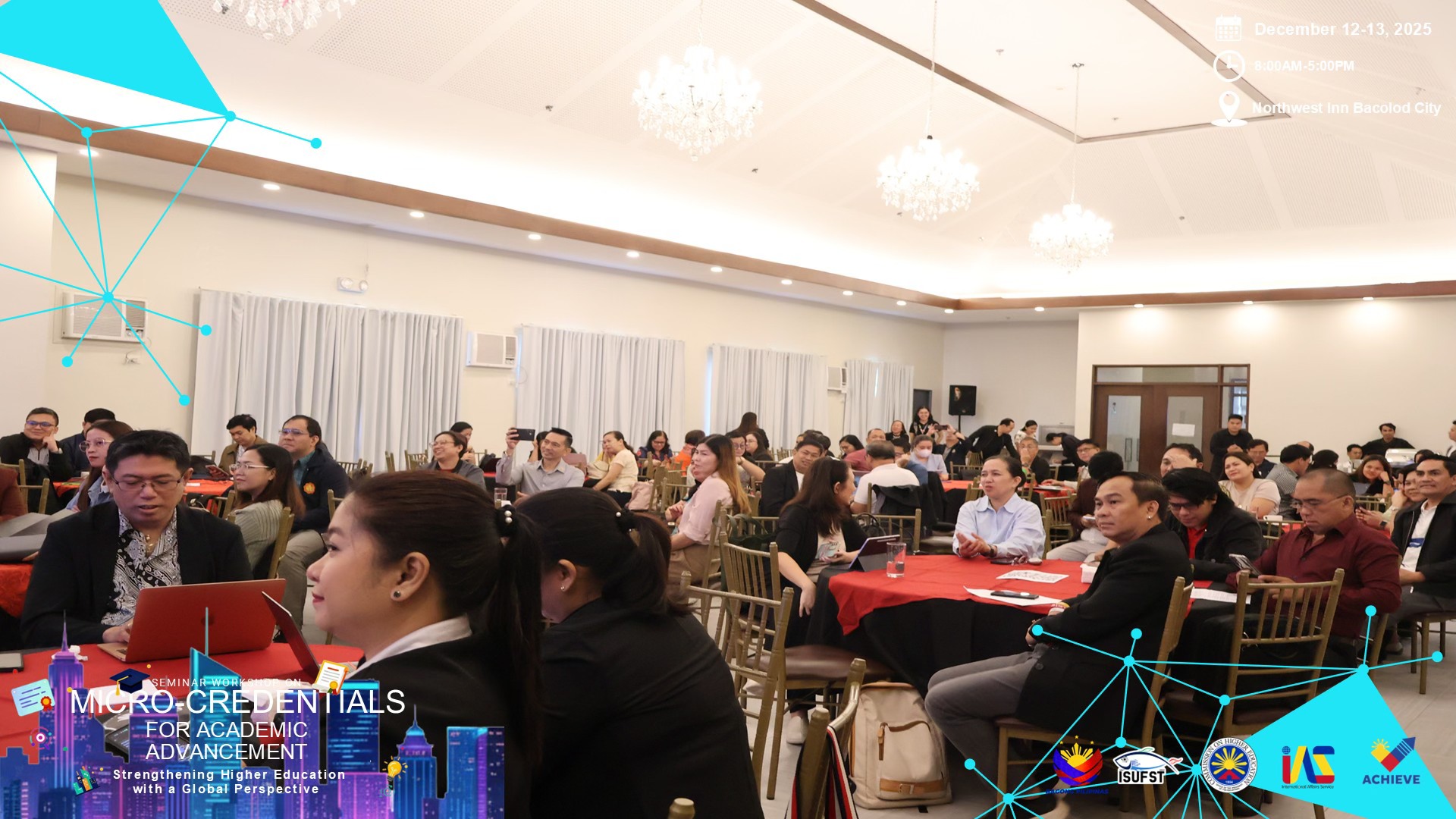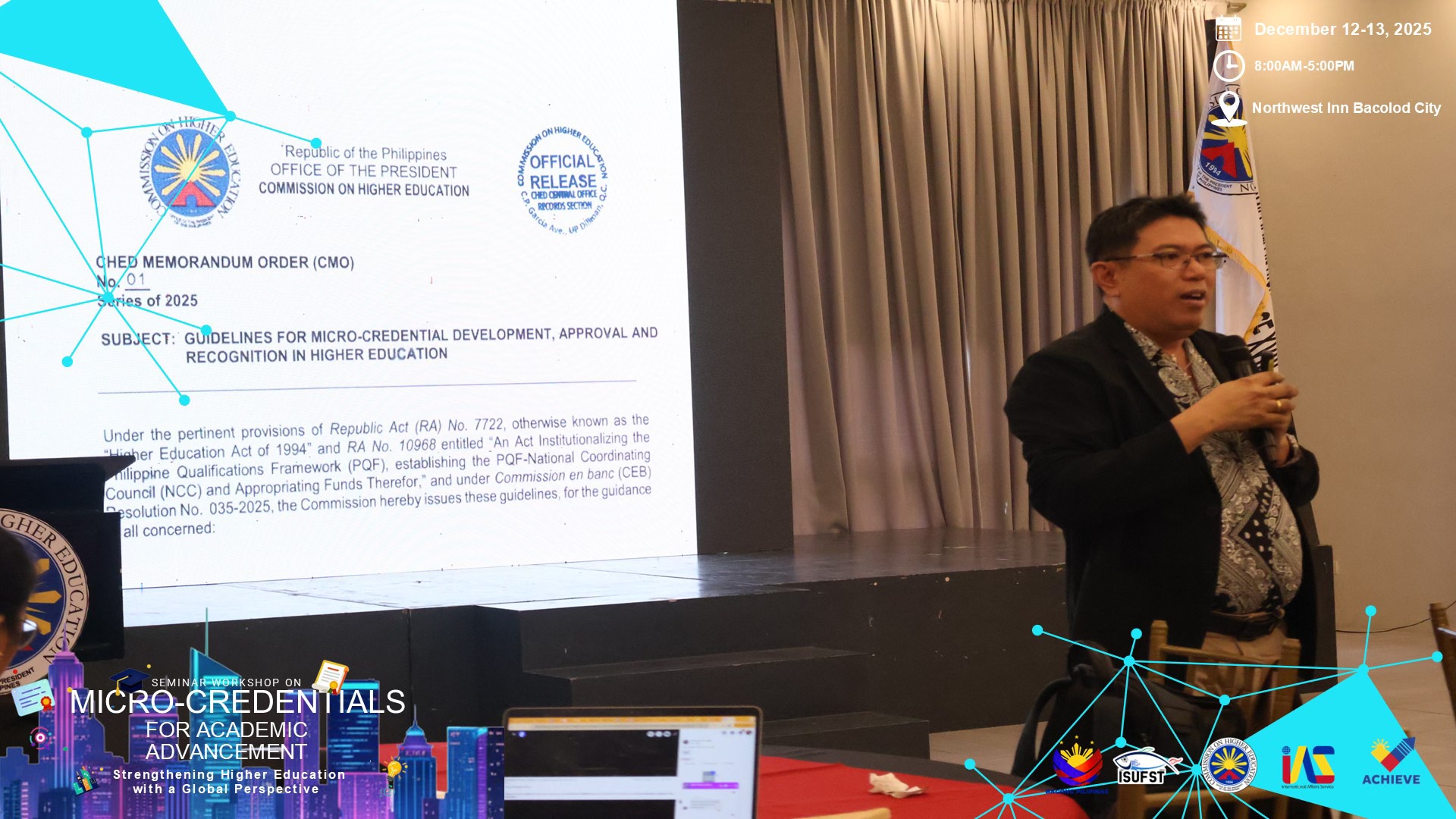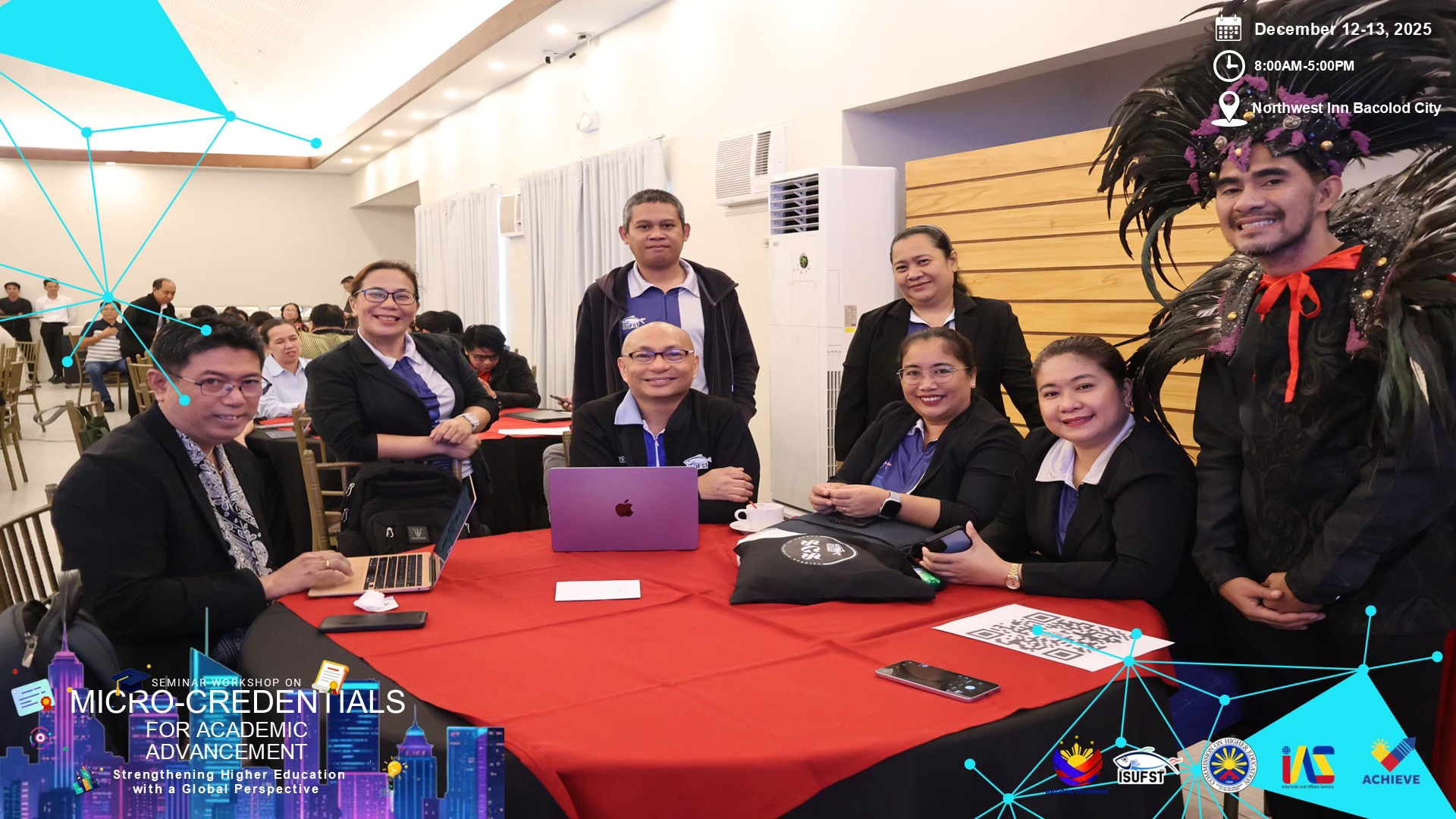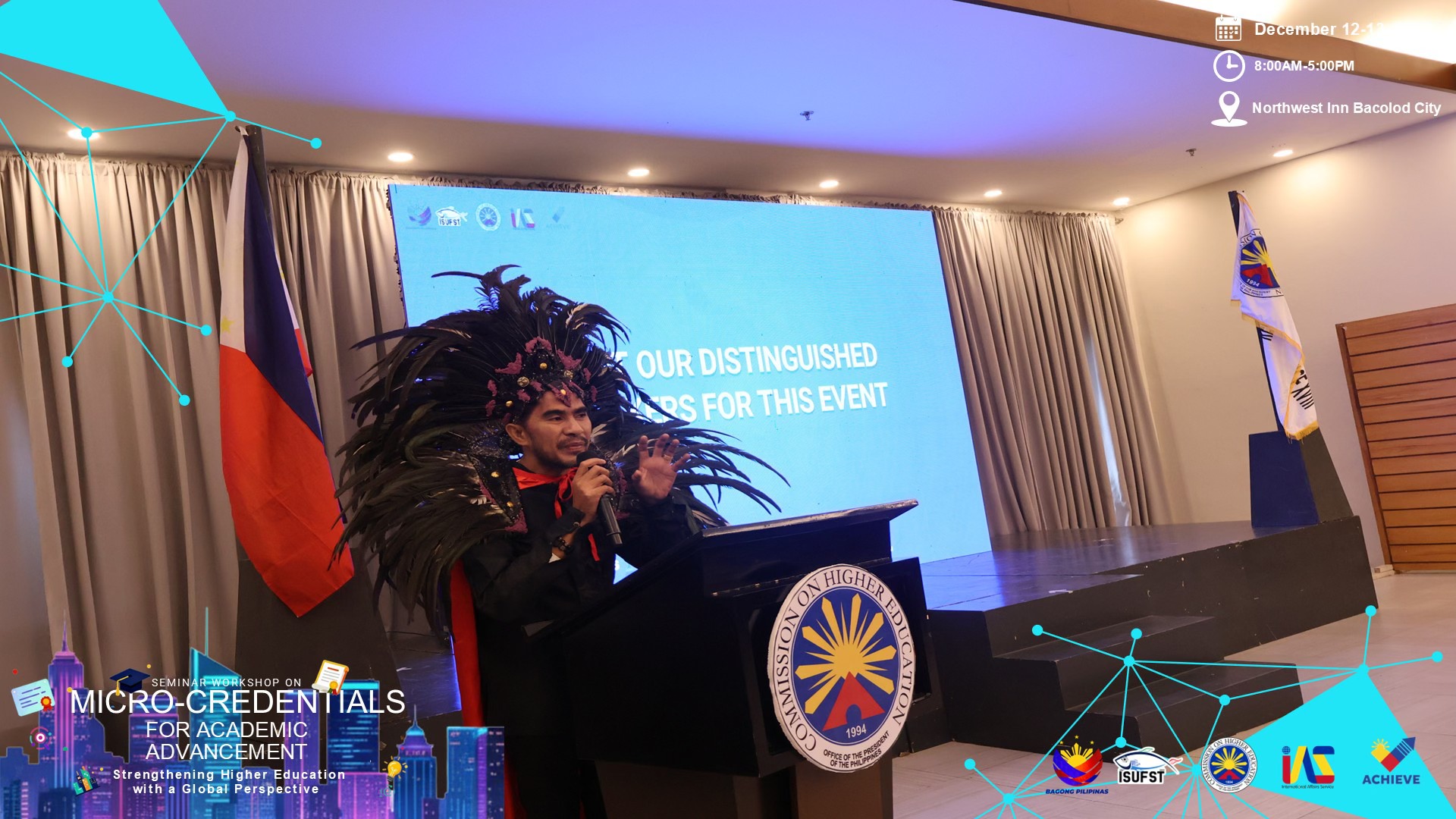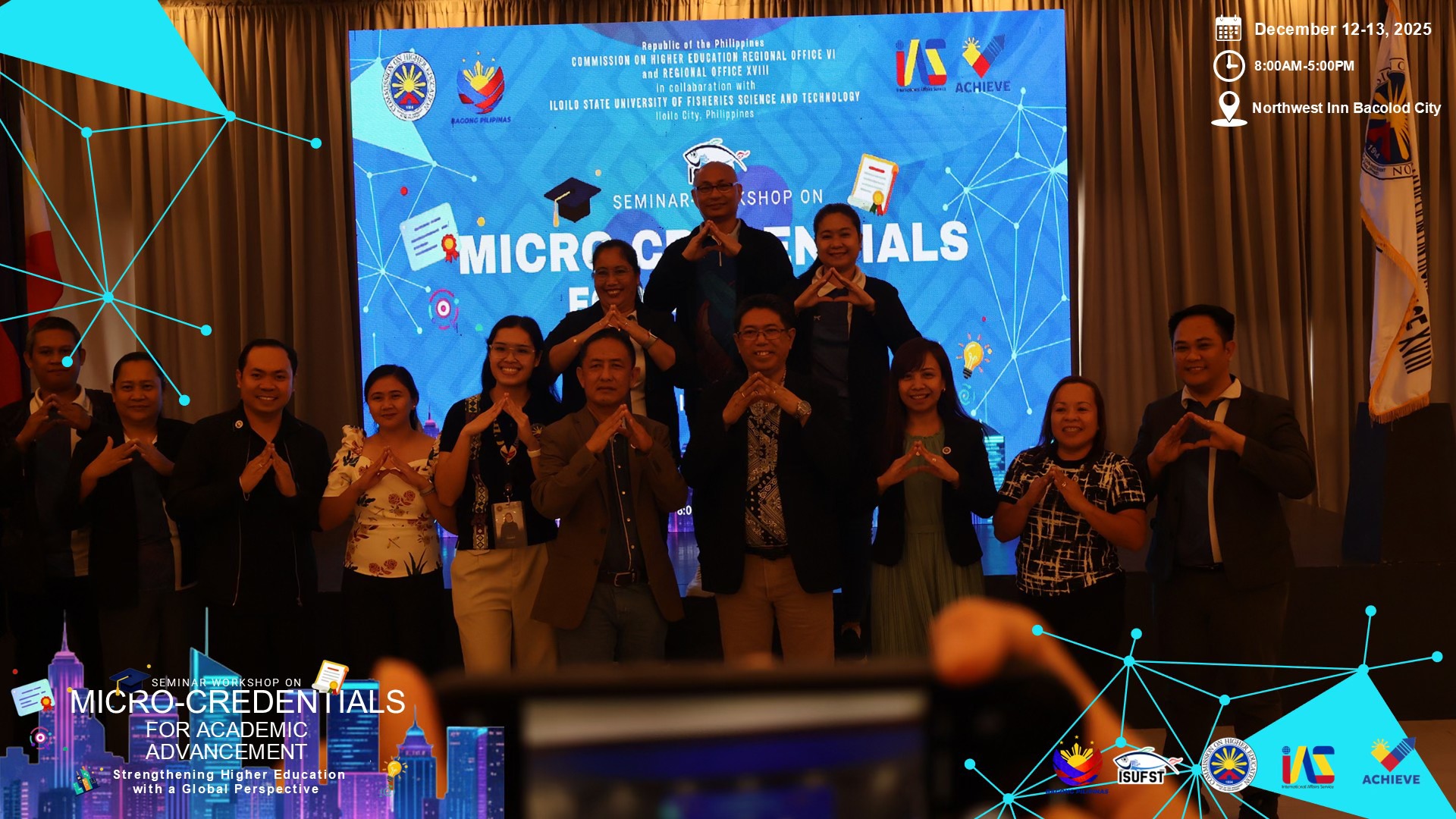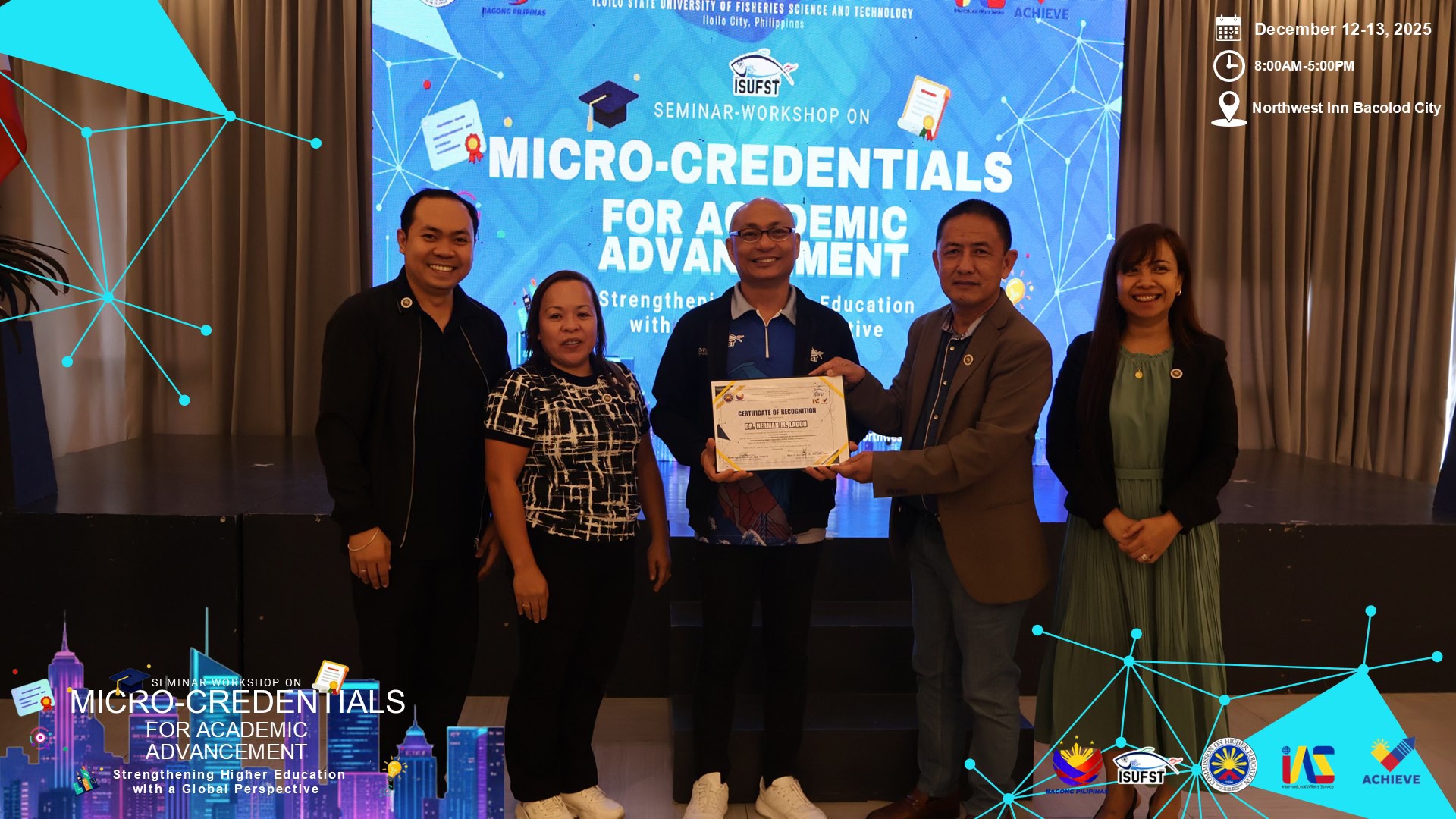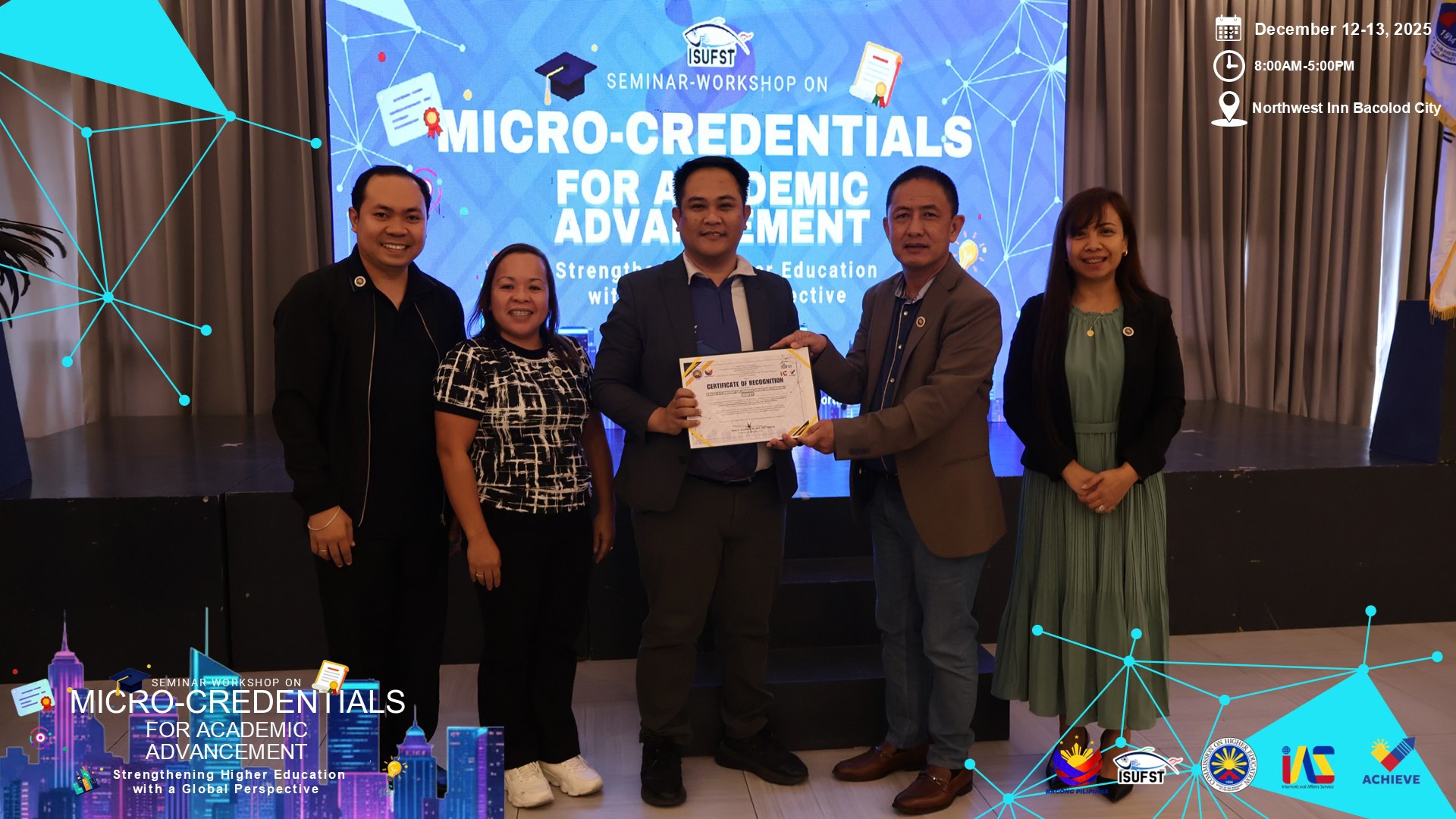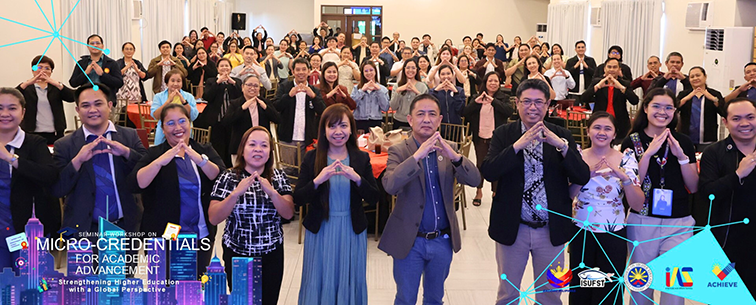
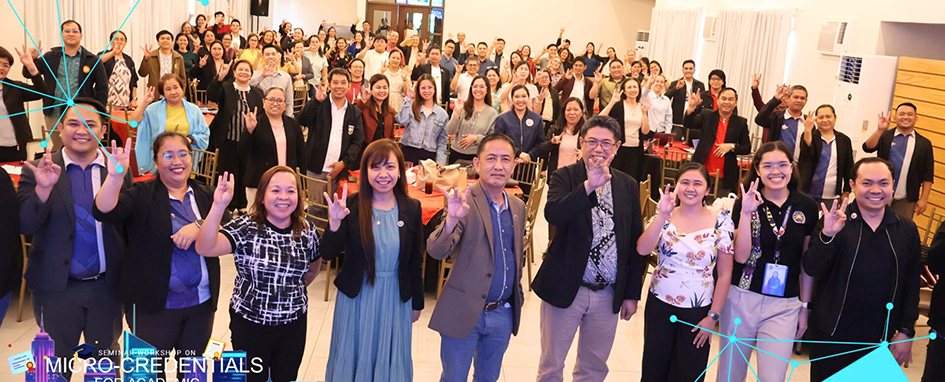
Bacolod City—In a landmark moment for Philippine higher education, more than 100 university executives representing 28 higher education institutions (HEIs) across Western Visayas and the Negros Island Region stood together this Saturday, December 13, to take the “Micro-Credentials for the Future” Pledge of Commitment—a united response to CHED’s newly released CMO No. 1, Series of 2025, which formally introduces micro-credentialing as a national higher education strategy.
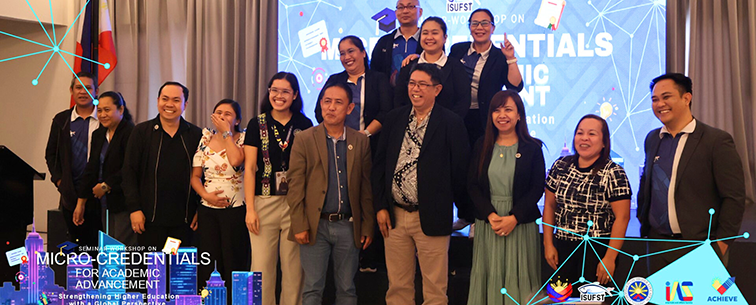
The oath-taking capped the two-day seminar-workshop on “Micro-Credentials for Academic Advancement: Strengthening Higher Education with a Global Perspective,” jointly organized by CHED Regional Offices VI and XVIII in partnership with the Iloilo State University of Fisheries Science and Technology (ISUFST) as co-organizer.
A Regional Response to a National Directive
With CMO 1 s. 2025 laying out the policy framework for micro-credentials in the Philippines, CHED RO VI and CHED RO XVIII convened the workshop as their first major regional initiative to help HEIs interpret, contextualize, and operationalize the newly mandated system. The activity also became one of the earliest regional embodiments of CHED’s newly launched ACHIEVE Agenda, the Commission’s 7-point higher education transformation roadmap for 2025–2030, which highlights Advanced and Accessible Lifelong Learning, Expanded Internationalization, and stronger, future-ready HEI systems.
The gathered university heads—vice presidents, deans, directors, department and program heads—took the historic pledge as a commitment to transform the national directive into concrete, localized programs for learners in their respective communities.
Before the oath, participants were reminded: “Micro-credentials are not trends or buzzwords. They are our response to the real needs of our communities—reminding us that learning must stay flexible, human, and accessible to those who depend on our institutions.”
With right hands raised, they declared in unison:
“We pledge our unity and commitment to lifelong learning.
We vow to uphold CHED’s vision, to design micro-credentials that empower learners, and to collaborate for excellence and innovation.
Together, we stand as catalysts of change for our students, our regions, and our nation.
We pledge. We commit. We shall fulfill.”
Day 1: Framework, Dialogue, and Design
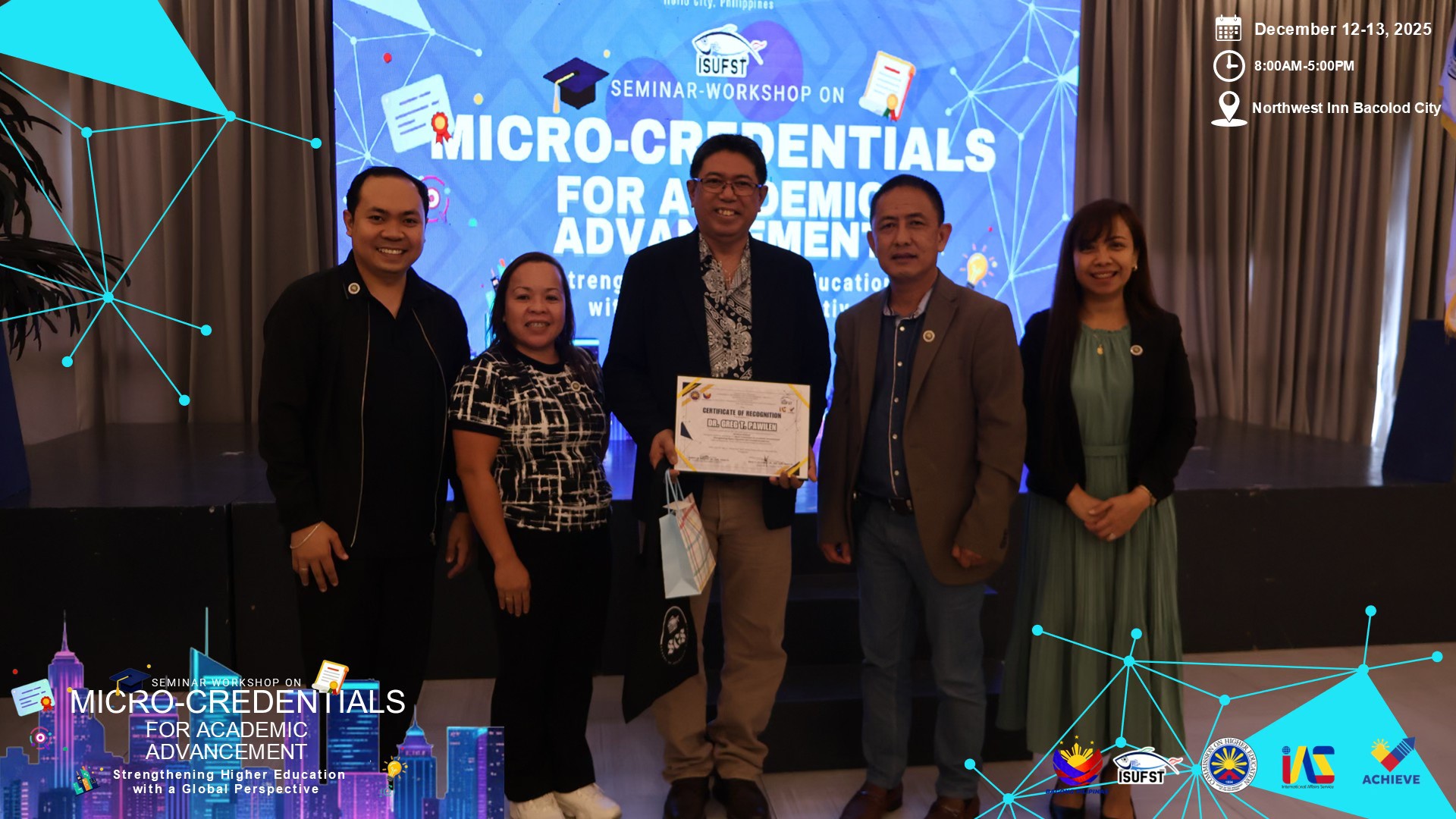
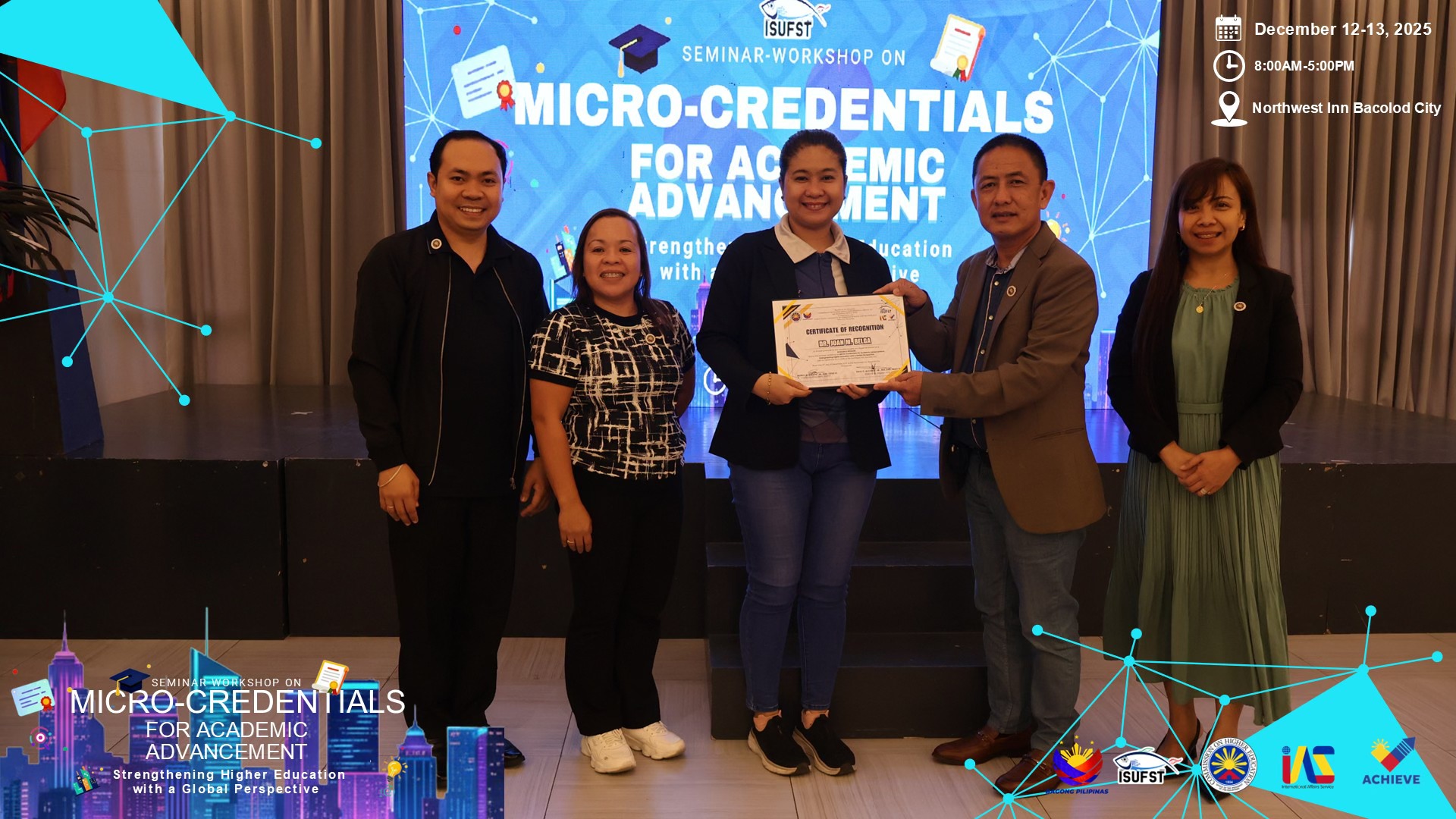
The two-day workshop opened on December 12 with discussions led by micro-credentials expert Dr. Greg Pawilen, who outlined global models and emerging credentialing trends. ISUFST VPAA Dr. Joan M. Belga also shared “ISUFST’s Journey Toward Building Micro-Credential Ecosystems,” offering practical insights from the university’s early adoption efforts.
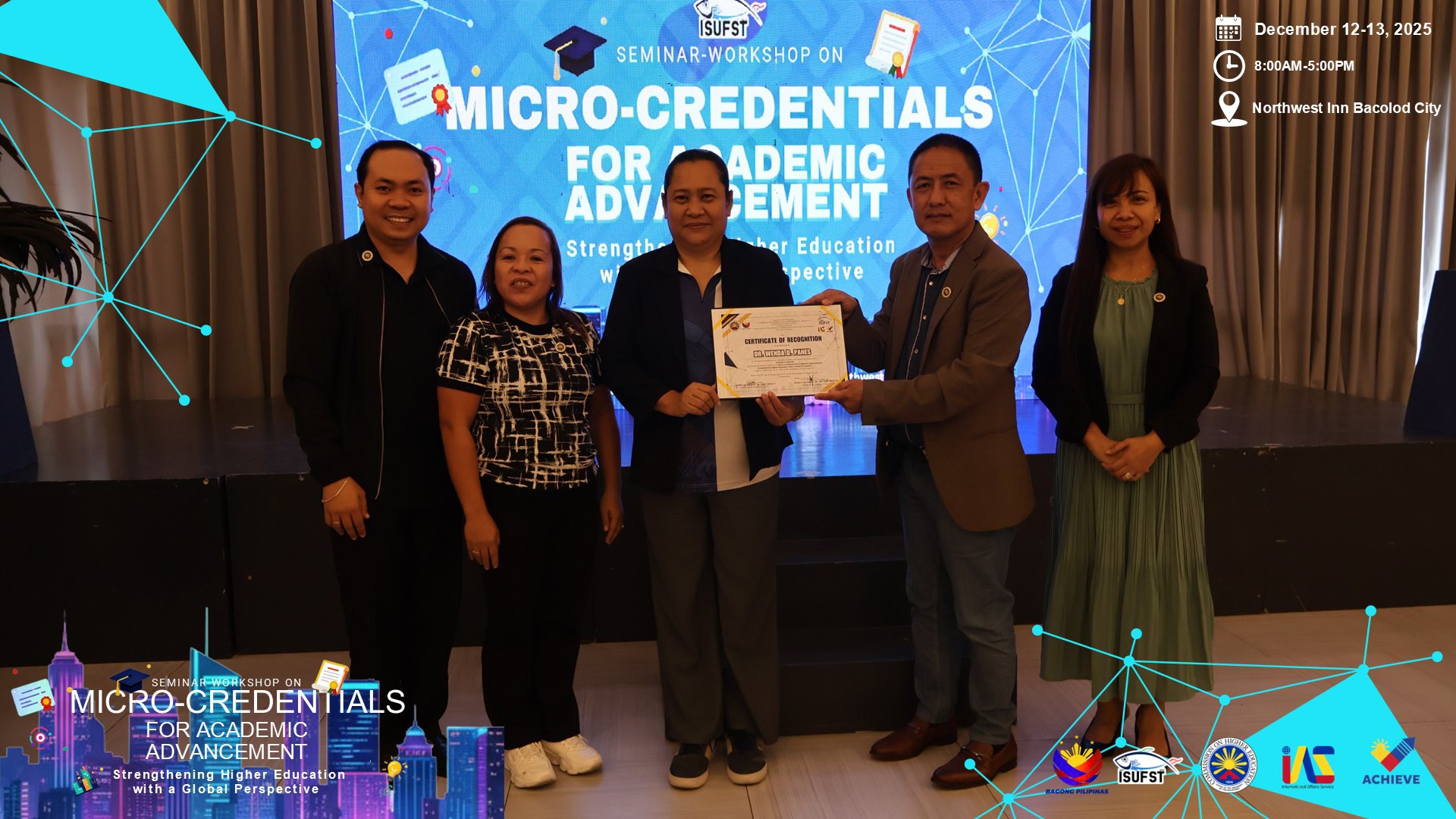
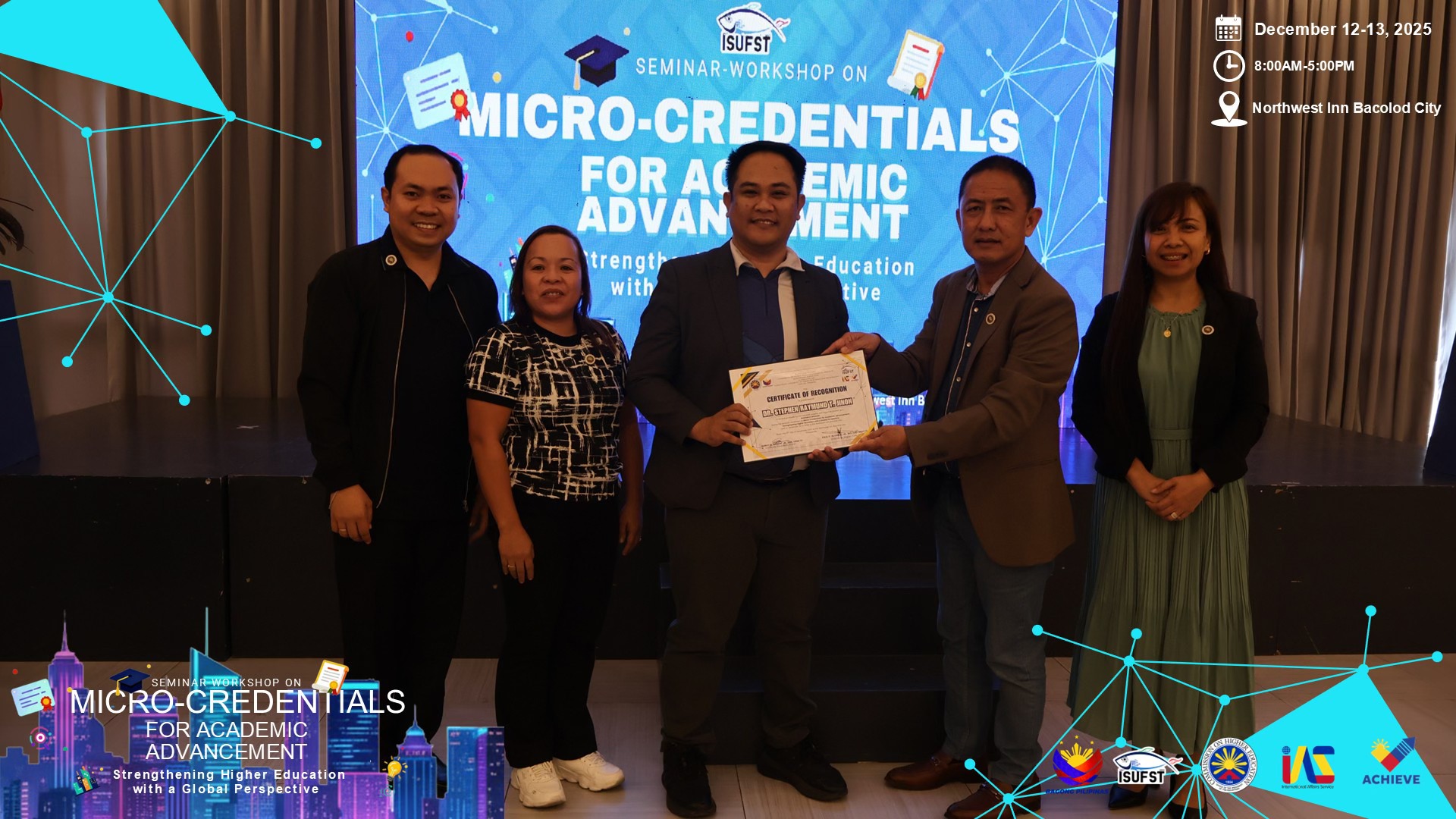
ISUFST resource speakers Dr. Stephen Raymund Jinon, Dr. Wenda Panes, and Dr. Herman Lagon capped the day with sessions on policy alignment, technology-driven design, and micro-credentialing for psychological first aid.
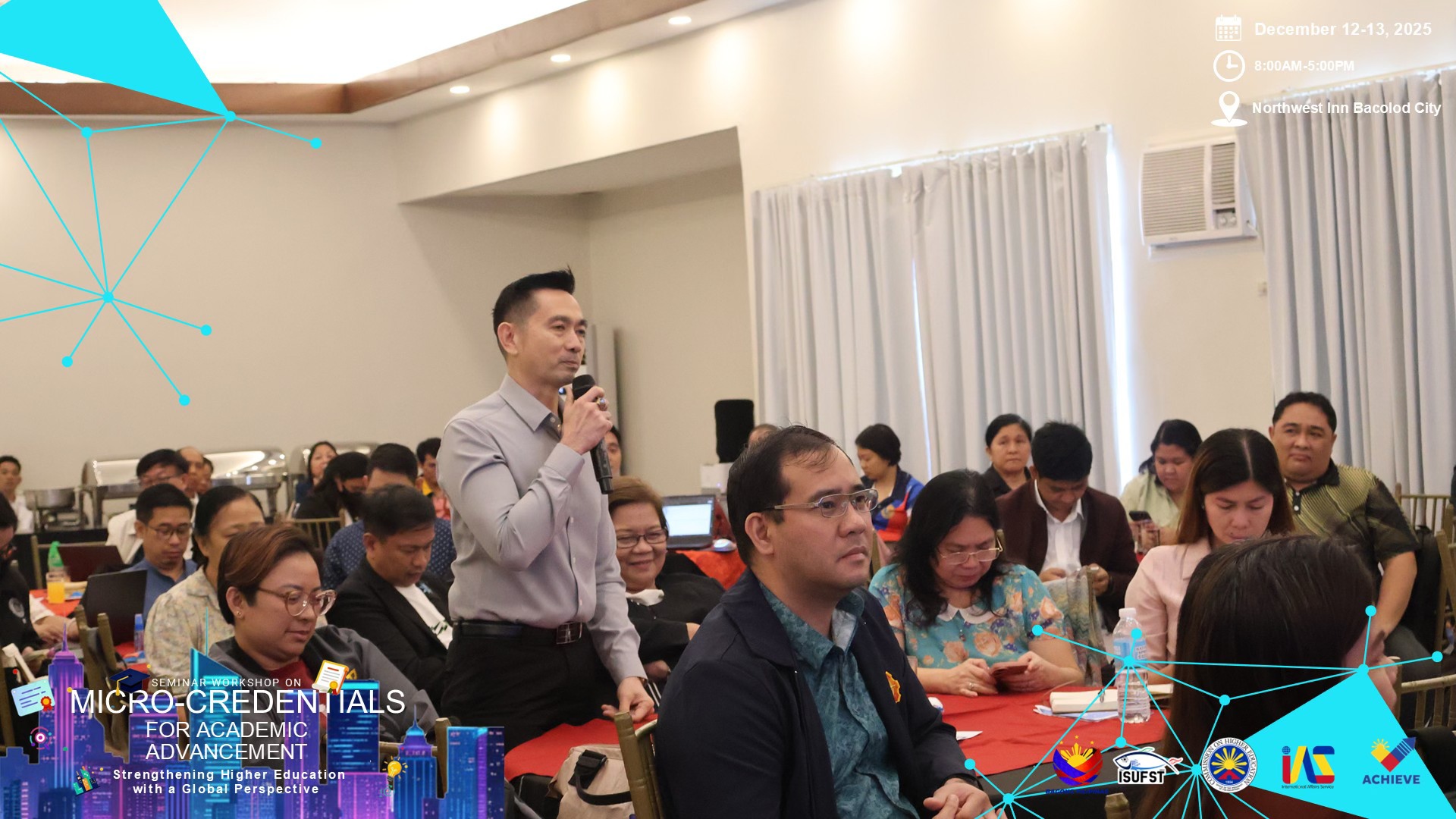
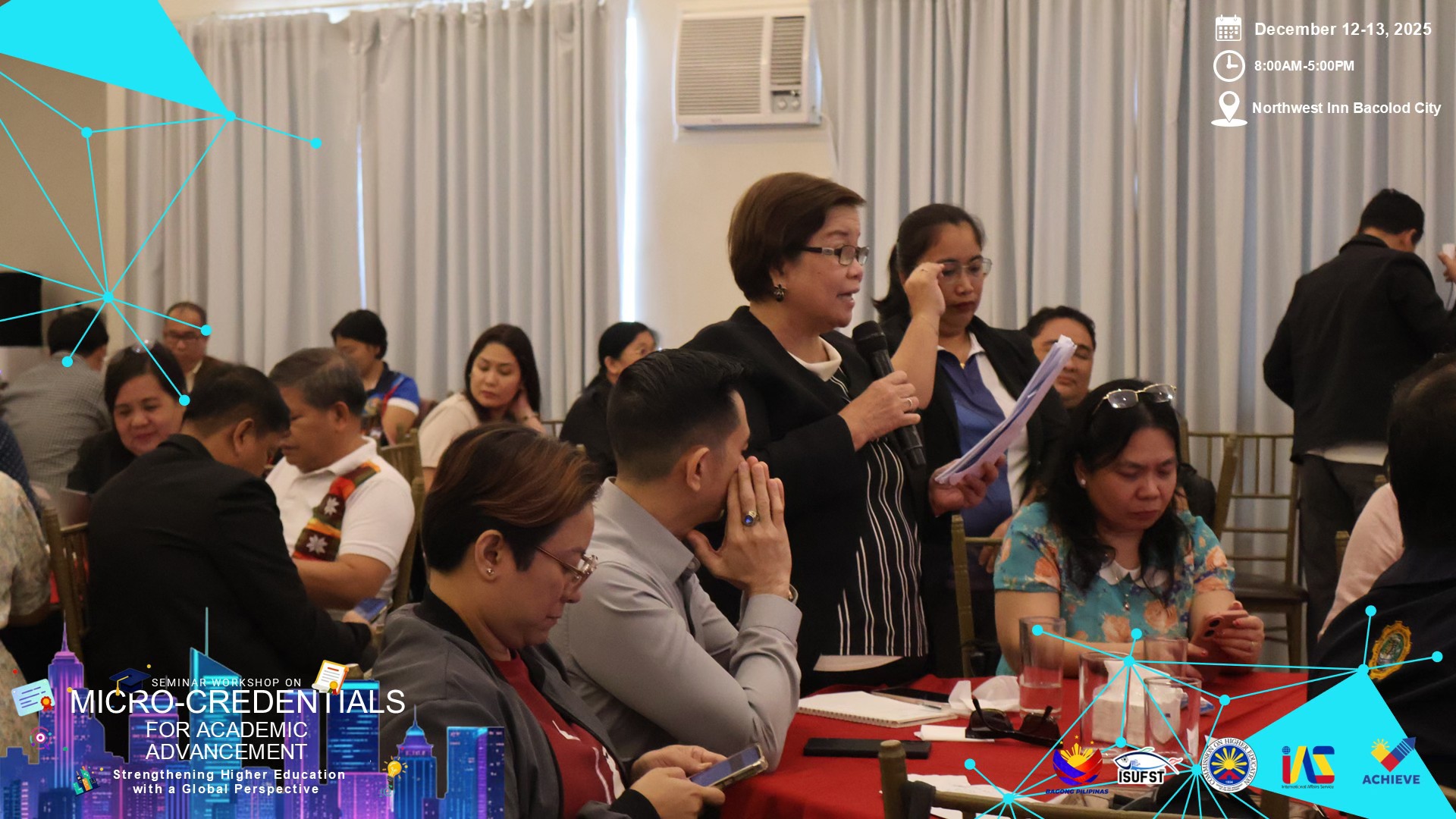
The day ended with HEIs drafting their own micro-credential proposals aligned with CMO 1 s. 2025—outputs presented on Day 2 for feedback and refinement.
Dr. Alvarez: “ISUFST is trailblazing”
During the afternoon program, CHED Region XVIII Director and former CHED Region VI Director Dr. Raul Alvarez expressed gratitude for ISUFST’s leadership. “ISUFST is truly trailblazing,” he said.
He also linked the regional workshop to CHED’s new ACHIEVE Agenda, emphasizing the ‘A’—Advanced and Accessible Lifelong Learning. “In our push for micro-credentials,” he said, “we are operationalizing what the ‘A’ in ACHIEVE stands for: advanced and accessible lifelong learning. This is not just a slogan. It is our responsibility. Every Filipino, regardless of age or circumstance, must have pathways to keep learning and improving.”

“We thank ISUFST for openly sharing its journey. When you go home, we hope you bring at least one concrete micro-credential idea that fits your school and community. Micro-credentials are something we have missed for a long time—learners need small, focused tasks that help them return to their fields more efficient and better prepared.”
He concluded: “Our job in higher education is to build competencies. Micro-credentials are one of the tools that will help us do exactly that.”
Day 2: Presentations and a Collective Promise
Day 2 continued with proposal presentations and collaborative critique. Chief Education Program Specialist Danebeth Narzoles of CHED RO VI reinforced another ACHIEVE pillar—the ‘E’ for Expanded and Impact-Driven Internationalization, noting how micro-credentials can help local HEIs enter global learning ecosystems through stackability, mobility, and cross-border recognition. She proudly highlighted that Western Visayas and the Negros Island Region recently ranked as the second runner up nationwide for Best Internationalization Initiative, a recognition she described as “proof that our regions are ready for global engagement.”
The final day centered on proposal sharing, collaborative critique, and validation. Facilitators said the process surfaced strong models and clarified shared challenges, giving schools clearer direction for implementation.
But it was the Pledge of Commitment that marked the workshop’s emotional and symbolic high point—signifying a unified regional movement toward flexible, stackable, skills-based learning aligned with ACHIEVE’s thrusts.
Strengthening CHED–ISUFST Synergy
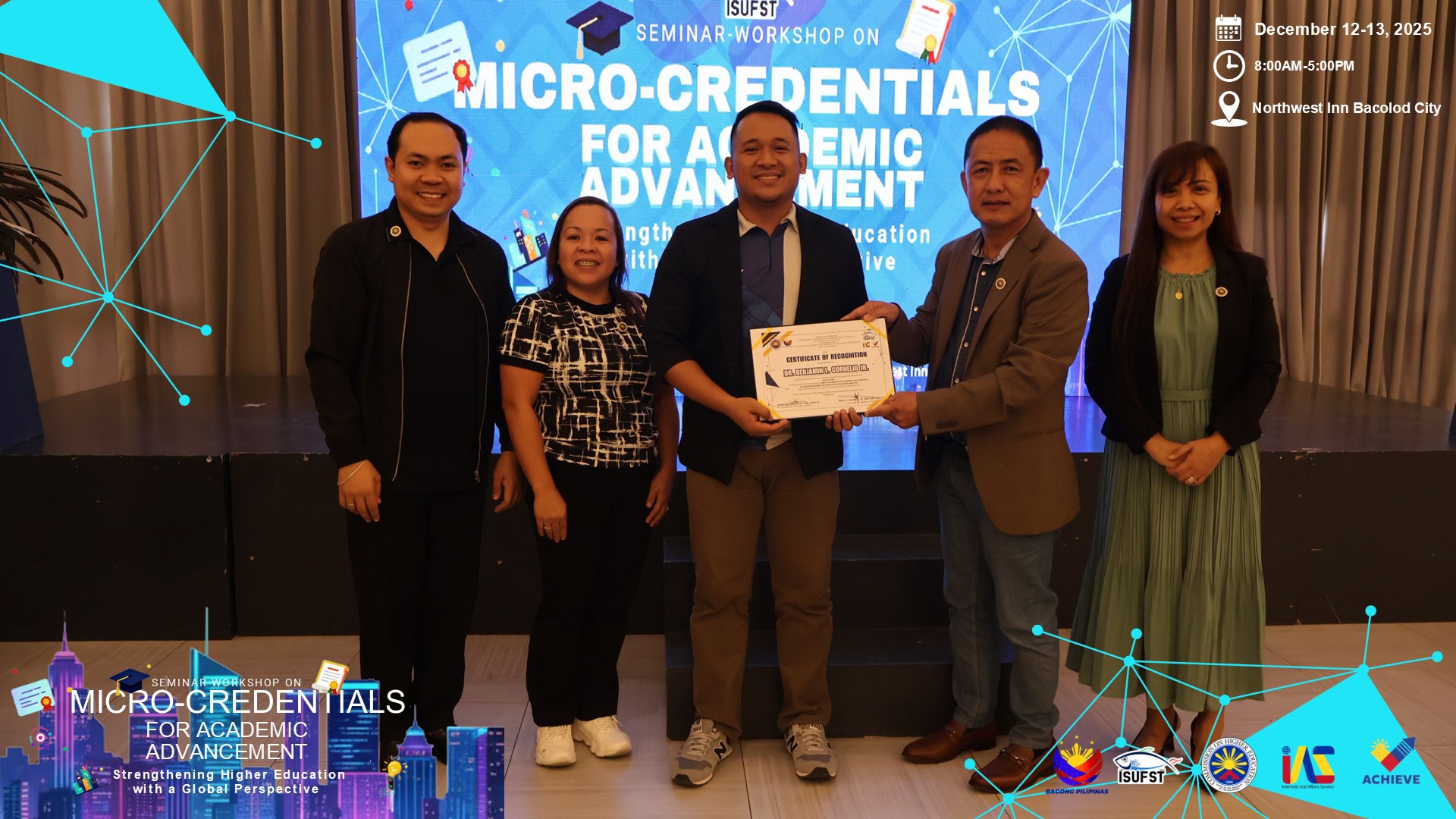
ISUFST’s delegation—Dr. Belga, Dr. Jinon, Dr. Panes, Dr. Lagon, Dr. Joana Paula Biñas, Mr. Jonard Verdeflor, Dr. Michle Celeste, Dr. Michelle Bales, Mr. Dave Allan Tagacay, and Dr. Benjamin Cornelio Jr.—served as co-facilitators, technical leads, and secretariat support.
Coming shortly after the CHED–ISUFST Creative Works collaboration last October, this workshop signals deepening regional synergy in shaping higher education innovation.
As the two-day event closed, one belief resonated among all 28 universities present: Higher education must evolve with the times—but always remain rooted in the lived realities of the communities it serves.
(Herman Lagon | PAMMCO)