There are stories that arrive quietly, without drumrolls or headlines, and yet linger longer than the loudest victories. Gerobe Arce’s story is one of them. You might first notice him not for the engine he is fixing or the class he is answering in, but for how the world initially sees him—shorter, different. But stay long enough, and what you will remember is not his height. It is his drive. It is the rhythm of a life that refuses to be measured by what is lacking, but instead by what keeps moving forward.
Gerobe, 24, grew up between Tuburan, Pototan and Buyu-an, Tigbauan, in a life he casually calls “normal”—easygoing, carefree, the kind of childhood that did not feel like it needed a narrative. But somewhere in that simplicity was a quiet inheritance: a father who modeled self-love not through speeches but through living, and a family that never treated limitation as identity. “I was born confident,” he says, almost as if it were the most ordinary thing in the world.
He knew early on that he was physically different. But in his telling, that difference never stretched beyond the surface. “Physically only,” he says. Everything else—his curiosity, his humor, his will—remained intact. That clarity shaped how he entered school, how he faced stares, and how he refused to let curiosity about him define him. He had already decided: he would define himself.
A LIFE IN MOTION
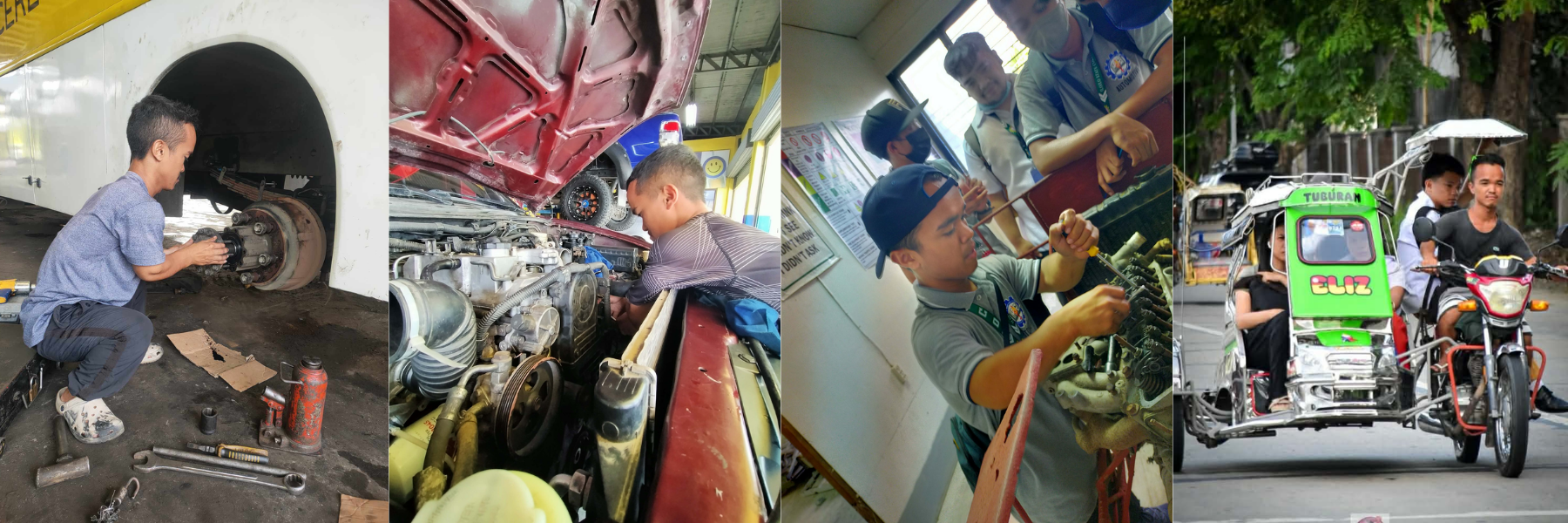
Long before he entered the Iloilo State University of Fisheries Science and Technology (ISUFST), Gerobe already knew what he wanted. Machines fascinated him. Engines, in particular, spoke a language he wanted to master. “Even before elementary, I knew I wanted automobiles,” he recalls. It was not just about fixing things. It was about understanding how they worked—how parts moved together to create something bigger than themselves.
That same philosophy quietly shaped his own life. Because while most students measure their days in lectures and deadlines, Gerobe measures his in kilometers.
He drives a tricycle.
Not occasionally. Not as a side story. But as part of the everyday rhythm that sustains his education. Born into financial constraints, he watched his father move from one job to another, often behind the wheel. So when his turn came, he did not hesitate. “I think of finishing my studies through my own sweat and blood,” he says, without drama, just truth.
A typical day for him is not something easily romanticized. It is early mornings, long routes, passengers who come and go, then classes, then studying, then sometimes laughter with friends squeezed in between.
And lately, the road has become even more demanding. With fuel prices rising, every trip carries a heavier weight—not just for passengers, but for him as both driver and student. What others experience as inconvenience, he feels as daily calculation. Still, he manages. He times his trips before and after classes, squeezes in study hours between shifts, and learns to stretch both time and earnings. Some days begin before sunrise, with a few early passengers before his first class. On lighter afternoons, he returns to the road, then studies at night—sometimes in between trips, sometimes long after the last passenger has gone home.
It is not perfect. It is not easy. But it works—because it has to.
It is the kind of life that would exhaust many. But Gerobe does not describe it that way. “It’s extraordinarily fun,” he says, smiling through the grind.
There is something disarming about that answer. In a culture that often celebrates struggle only when it looks painful, Gerobe quietly disrupts the script. For him, hardship is not always heavy. Sometimes, it is simply part of the journey—something you carry without complaint because you know where you are headed.
NO ROOM FOR QUITTING
Gerobe does not even pause when asked if he ever thought of quitting. The answer is simple—and striking in its certainty: he never did. Not once. “It was never considered,” he says. No dramatic breakdown, no near exit—just a quiet, stubborn choice to keep going, no matter what.
It is not because life was easy. It is because his mindset was already set. He was, in his own words, “driven.” And that word, repeated across his story, becomes its quiet anchor.
At ISUFST, he found a space that did not reduce him to his differences. There were moments of curiosity, of course—people who stared, people who wondered. But beyond that, he found something more important: normalcy. Belonging. “I just don’t mind,” he says. What stayed with him more were the teachers who encouraged him, classmates who listened, and a community that let him grow without needing to explain himself.
It is the kind of environment the university continues to build under the leadership of ISUFST President Dr. Nordy Siason Jr.—one that does not merely accommodate differences, but recognizes them as part of a larger vision of inclusive, empowering education. In Gerobe’s case, inclusion is not a policy. It is something lived, quietly, every day.
In fact, one of the moments he cherishes most is simple: speaking in class and being heard. “When I speak and everyone listens,” he shares. In that moment, the labels fall away. He is not the “PWD student.” He is simply a student—with ideas, with a voice, with presence.
That is what inclusive education looks like—not grand statements, but everyday spaces where dignity is ordinary.
THE MEASURE OF A MAN
Gerobe’s academic journey is not just about finishing. It is about finishing well. He wants to graduate with Latin honors—not “para magpasikat,” not for recognition, but for something closer to the heart. For pride. Not just his, but his family’s—the same people who never questioned his potential even when life was not easy.
“My teachers are my motivators,” he says, giving credit without hesitation. At ISUFST, where education is meant to empower, his story becomes a reminder that success is not just about skills—it is about who you become along the way.
The university’s values are not just slogans to him. They show in how he lives. Integrity in earning honestly. Discipline in showing up every day. Social justice in proving that education should be within reach. And excellence—not about being perfect, but about being consistent.
Driving a tricycle taught him things school cannot. “I learned the value of every peso,” he says. Each fare is effort. Each earning is responsibility. Walang sayang.
For now, he is at F&E Automotive Division in Mandurriao, Iloilo City, learning not just how engines work, but how a future begins. It is one step in a journey still taking shape. He hopes to stay on after graduation, but he also trusts the road ahead. One day, he dreams of a talyer he can call his own—built from the same grit that brought him this far. There is also the possibility of working abroad. Nothing is fixed yet. Like the engines he studies, his life is still in motion—still being assembled, still becoming.
So when he talks about his dreams, simple lang. A happy home. A comfortable life. Hindi magarbo, but real.
DRIVEN BEYOND LIMITS
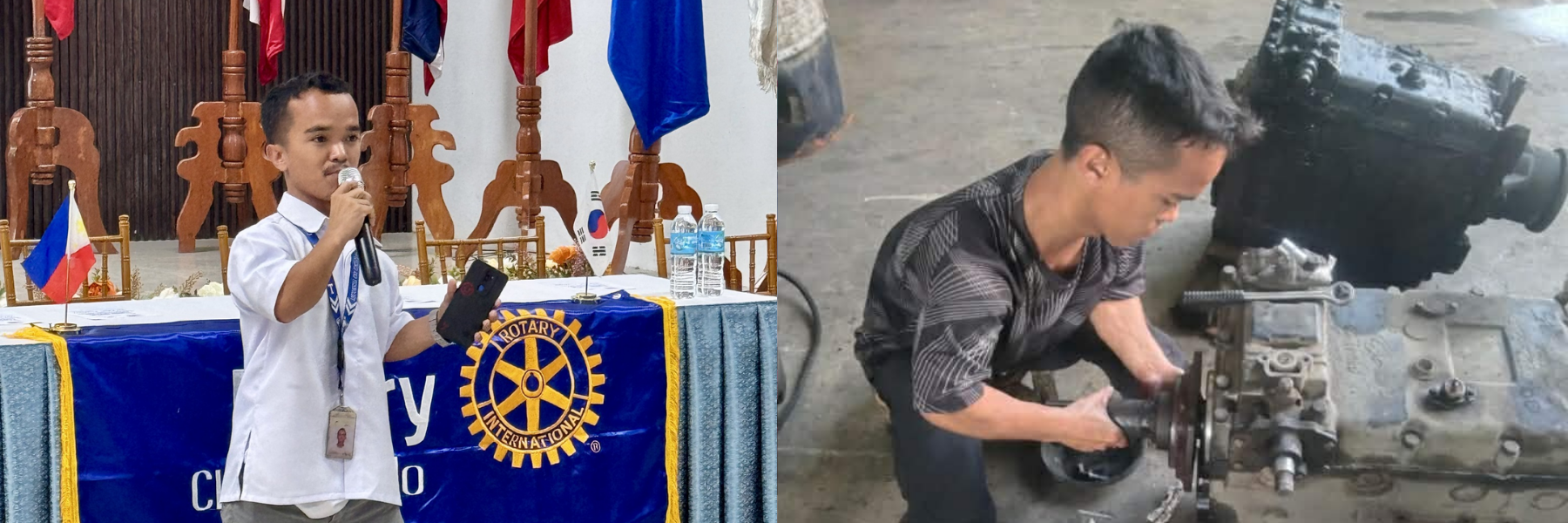
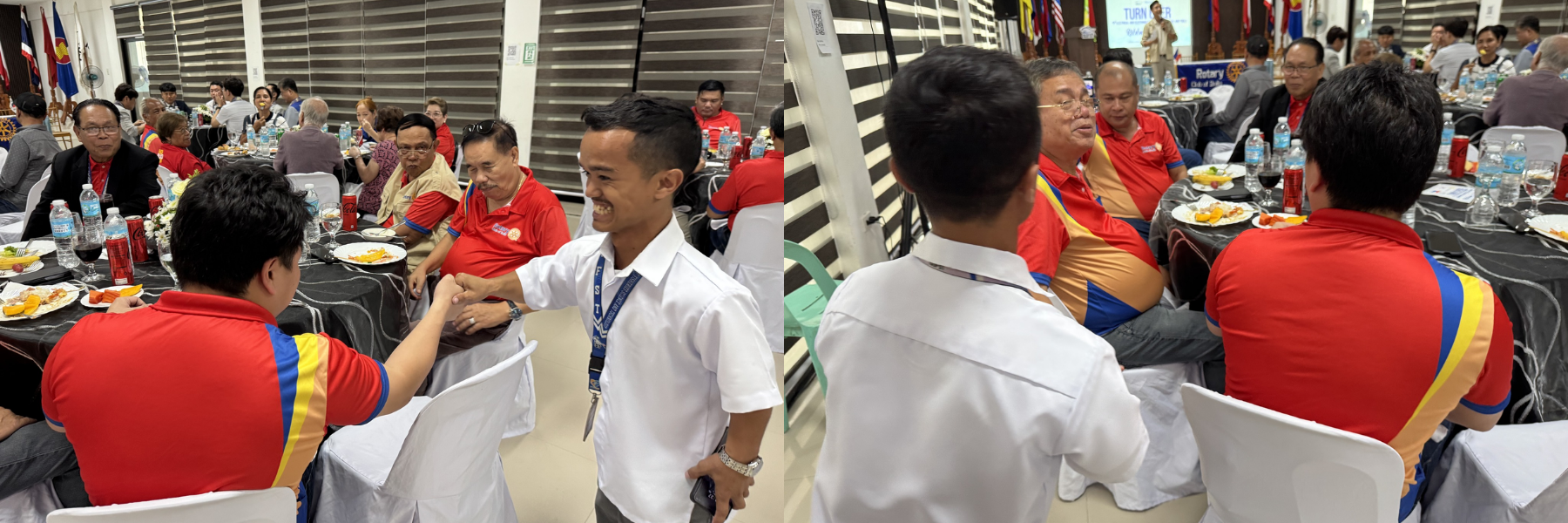
On March 11, 2026, at the ISUFST TechnoHub, Gerobe stood in front of the Filipino and Korean Rotarians and ISUFST officials—not as “the tricycle driver,” not just as “the student,” but as someone representing many. He delivered a testimony during the Global Grant turnover of ₱1.89 million worth of equipment.
“Because of these tools, we are more confident that our practical training will prepare us for real work, business, and professional life,” he said, shifting seamlessly from Hiligaynon to English, and closing with a heartfelt “Kamsahamnida”—a quiet but powerful thank you that carried both gratitude and hope.
That moment was bigger than him. He became the link between those who gave and those who will benefit.
Aligned with SDG 4, 8, and 17, the project supports education and opportunity. But beyond that, it is stories like his that make everything feel real. It is students like Gerobe who give those numbers meaning.
Because what good are tools if there are no hands willing to use them? What good are opportunities if there is no one determined enough to take them?
Gerobe answers those questions not with words, but with a life lived in motion.
There is a tendency to tell stories like his in a certain way—to frame them as extraordinary because of difficulty. But perhaps the more honest way to tell it is this: Gerobe Arce is not inspiring because he is a person of short stature who succeeded. He is inspiring because he refused to see himself as anything less.
His definition of success is simple: perseverance. “If you have a goal, strive hard to reach it,” he says. Ability, strength, success—these, for him, are not separate ideas. They come together, built over time, shaped by effort.
And maybe that is the quiet lesson his story leaves behind. Not all victories are loud. Some are steady. Some are built in early mornings, long rides, and classrooms where a voice finally finds space.
Years from now, when someone tells the story of Gerobe Arce, he hopes to be remembered for his faith and for inspiring others to persevere. But even now, without waiting for that future, his life is already doing exactly that.
Not by asking for attention.
But by moving forward—one determined step, one long ride, one honest day at a time. (Herman Lagon | PAMMCO)