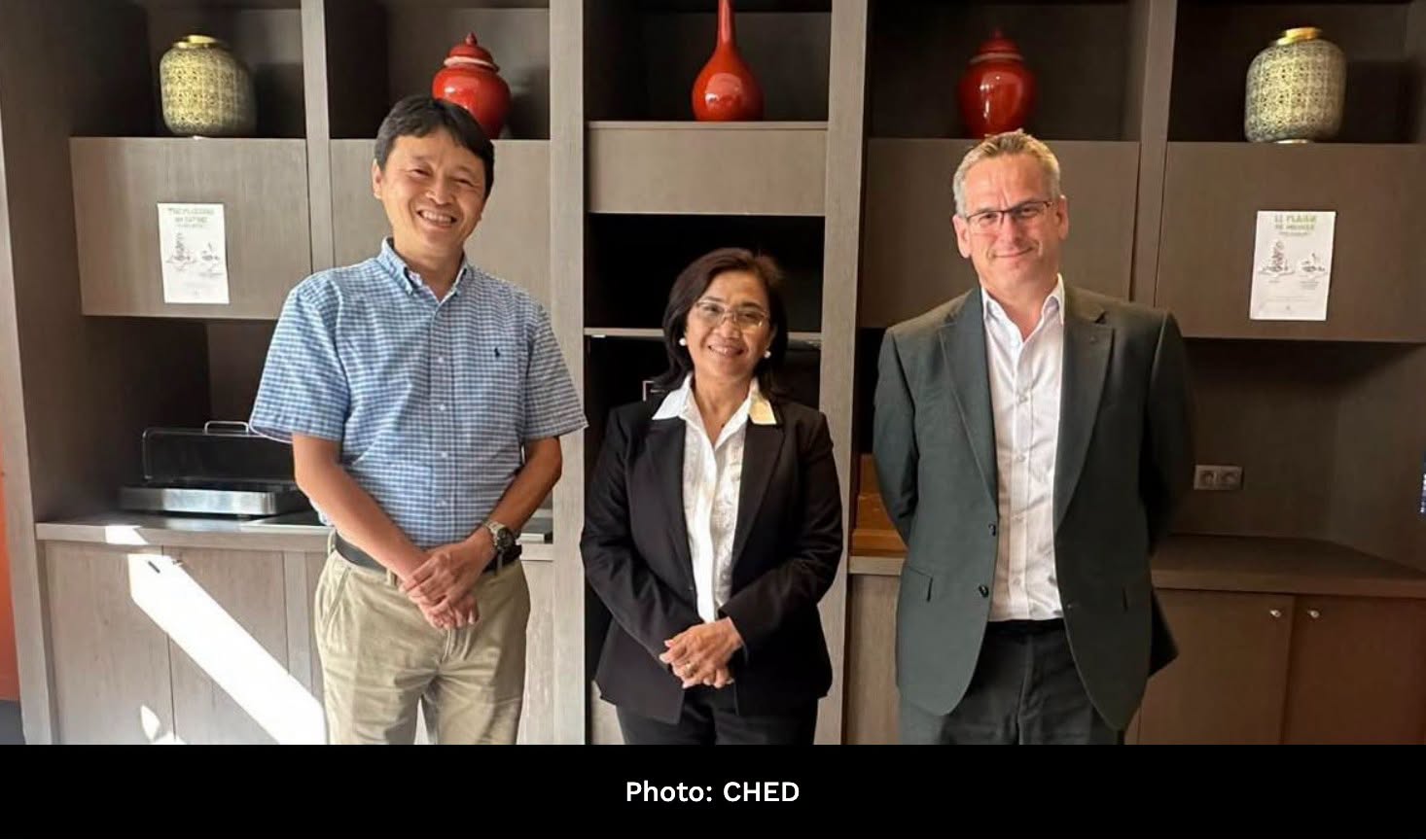
BAROTAC NUEVO, Iloilo — The Iloilo State University of Fisheries Science and Technology (ISUFST) has expressed its full support for the Commission on Higher Education’s (CHED) efforts to forge international partnerships that will strengthen Philippine higher education in nuclear science, advanced research, and deep-tech innovation.
The initiative comes after CHED Chairperson Dr. Shirley C. Agrupis held separate meetings with officials from France’s International Institute of Nuclear Energy (I2EN) and United Kingdom-based innovation firm Biospire during the UNESCO Transforming Education Summit +4 in Paris.
According to CHED, discussions with I2EN centered on possible collaboration in graduate education, specialized training, student and faculty exchanges, research fellowships, academic mobility programs, and curriculum development in nuclear science and engineering. The French institute also presented opportunities for Philippine higher education institutions to benefit from France’s expertise through instructional support and learning visits to industrial and research facilities.
In a separate engagement, Agrupis met with Biospire Chief Executive Officer Masashi Matsunaga to explore research collaboration, technology transfer, and innovation in sustainable agriculture and food systems. The discussions also highlighted opportunities to connect Philippine researchers and universities with international academic and industry networks, particularly in agritech innovation.
For ISUFST President Dr. Nordy Siason, Jr., the development aligns with its continuing commitment to internationalization, research excellence, and innovation-driven education. “As a university recognized for advancing fisheries, marine sciences, agriculture, and technology, ISUFST sees global collaboration as an important pathway toward strengthening faculty capability, expanding research opportunities, and producing graduates equipped for emerging scientific and technological fields.”
Dr. Siason further noted that while ISUFST’s academic strengths remain rooted in fisheries, agriculture, environmental sustainability, and related disciplines, partnerships that promote advanced research, interdisciplinary learning, and technology transfer complement the institution’s long-term strategic directions.
The university also recognizes the potential value of nuclear science applications in agriculture, food systems, environmental monitoring, fisheries research, food safety, and resource management—areas where peaceful nuclear technologies continue to support scientific innovation worldwide.
ISUFST likewise welcomed CHED’s efforts to connect Philippine higher education institutions with leading international organizations, saying such collaborations could broaden opportunities for faculty development, student mobility, joint research, and knowledge exchange.
The university emphasized that expanding international academic partnerships remains essential to preparing Filipino graduates for an increasingly interconnected and technology-driven world while contributing solutions to national and global development challenges.
It is worth nothing that CHED clarified that the exploratory meetings form part of its continuing efforts to expand international linkages and that any future cooperation remains subject to further technical discussions and mutually agreed-upon programs and arrangements.
(Source: Adapted from a report by Sherylin Untalan, GMA News-July 18, 2026 | PAMMCO).